Running a security company involves much more than scheduling guards and covering client sites.
Companies also need to manage guard credentials, training records, working hours, safety procedures, incident documentation, client requirements, and access to sensitive operational information.
The challenge is that these responsibilities do not happen once a year.
Licenses expire. Guards move between sites. Post Orders change. Training needs to be renewed. Incidents create new records. Clients ask for documentation.
That is why security company compliance in 2026 needs to be part of everyday operations rather than something teams prepare for only when an audit or renewal is approaching.
Requirements vary by location, contract, and the type of security services provided, so firms should always confirm the rules that apply to their specific operation.
But there are several areas every security company should be prepared to manage consistently.
1. Keep Guard Licenses and Credentials Current
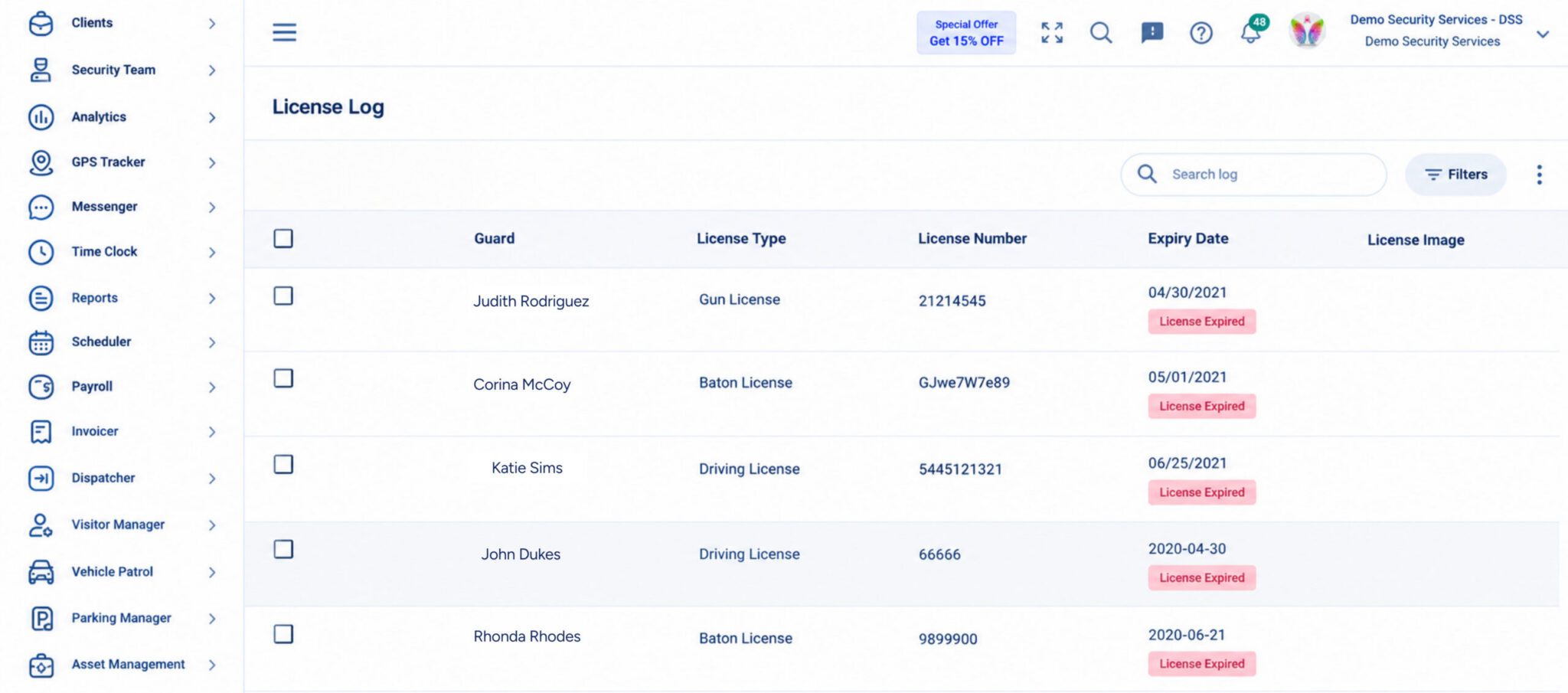
One of the most important parts of security guard compliance is making sure guards have the credentials required for the work they perform.
Depending on the location and assignment, this may include guard licenses, firearm permits, specialized certifications, or other professional credentials.
The challenge grows as the workforce grows.
Ten guards may mean ten different renewal dates. A larger operation can mean dozens or hundreds of credentials that need to be monitored.
Relying on calendars, spreadsheets, or someone remembering to check every expiration date can make renewals easier to miss.
A stronger process keeps credential information organized and gives managers enough time to act before something expires.
GuardsPro includes license management within its broader security management features, helping teams keep guard credentials and expiration information easier to monitor.
For a deeper look at this area, GuardsPro has also covered how companies can simplify security license management.
2. Keep Training and Site Instructions Up to Date
A valid license does not necessarily mean a guard is fully prepared for every assignment.
Security companies may also need to manage initial training, refresher training, company policies, client procedures, emergency instructions, and site-specific requirements.
A guard working at a hospital may need different instructions from one assigned to a warehouse, residential community, or corporate office.
That makes current site information essential.
Guards should know:
What areas require additional attention?
What access procedures apply?
Who should be contacted during an emergency?
What incidents need immediate escalation?
What has changed since the previous shift?
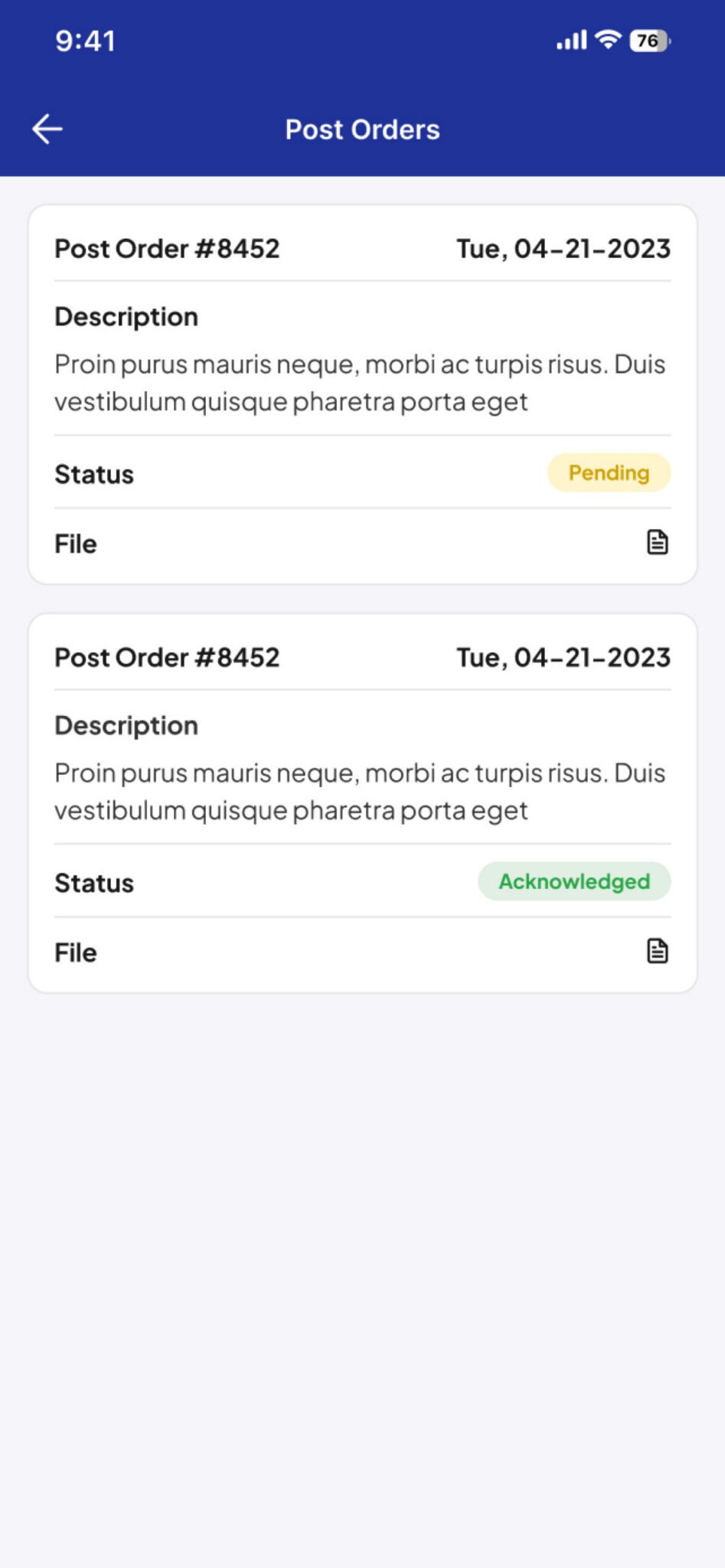
Company policies and Post Orders can be made available to guards through the GuardsPro Guard Mobile App, giving guards easier access to important field information while they are working.
The goal is not simply to distribute instructions.
It is to reduce the chance that a guard is working from outdated or incomplete information.
3. Maintain Reliable Time and Attendance Records
Compliance is not limited to security licenses and training.
Security companies are also employers, which means working hours, overtime, attendance, breaks, and payroll records may all need to meet applicable employment requirements.
This becomes harder when time records are being reconstructed from handwritten sheets, messages, or supervisor notes.
For example, a guard may work at one site and later cover another shift somewhere else. A schedule may change after a callout. Someone may stay beyond their original assignment.
If those changes are not recorded accurately, payroll and attendance records can quickly become difficult to verify.
A better system captures time closer to when the work actually happens.
The GuardsPro guard management system brings scheduling, attendance, Time Clock, reporting, and other operational information into a connected workflow.
Software does not determine which employment rules apply to a company, but reliable records make those requirements easier to manage.
4. Document Incidents and Safety Issues Consistently
Security companies need clear records when something goes wrong.
An incident may involve suspicious activity, an injury, property damage, unauthorized access, a safety hazard, or an emergency response.
If the event needs to be reviewed later, a supervisor should not have to piece together what happened from text messages and memory.
Consistent documentation should make it easier to understand:
When did the incident happen?
Where did it happen?
Who was involved?
What did the guard observe?
What action was taken?
Was supporting evidence captured?
Digital security guard reporting can help keep incidents and field observations connected to the wider security operation instead of scattered across separate files.
Good reporting supports compliance, but it also supports better internal reviews, client communication, and follow-up.
The sooner important information is documented, the less a company has to reconstruct later.
5. Keep Post Orders and Client Requirements Current
Security companies do not only have regulatory obligations.
They also have contractual responsibilities to clients.
A client may require specific patrol frequencies, access procedures, reporting schedules, visitor protocols, alarm-response steps, or escalation instructions.
Those expectations often live in Post Orders or site procedures.
The problem begins when those instructions change but not every guard receives the update.
An old binder at a guard post can become a compliance problem if the procedure inside it is no longer current.
Security companies should have a clear process for updating site requirements and making sure the correct version reaches the people working there.
Digital Post Orders can make this easier because current instructions can remain connected to the site rather than being passed informally from one shift to another.
That creates more consistency across guards and reduces the risk of different people following different versions of the same procedure.
6. Keep Records Ready for Clients and Reviews
Compliance becomes much easier when important information can be retrieved quickly.
Security firms may need to produce guard credentials, schedules, attendance records, incident reports, patrol history, training information, or other documents during a client review, insurance request, internal investigation, or regulatory process.
The challenge is usually not whether the information existed at some point.
It is whether anyone can still find it.
A company managing records across emails, spreadsheets, local folders, paper forms, and different supervisors’ files may have the information without having a reliable recordkeeping system.
Security companies should decide what records need to be retained, where they are stored, who can access them, and how long they need to be kept based on applicable requirements.
When client access is appropriate, the GuardsPro Client Web Portal can also give clients access to relevant operational information without requiring the back office to manually send every report or update.
Better organization does not just make audits easier.
It also makes everyday client service easier.
7. Control Who Can Access Operational Information
As more security operations move online, compliance also includes protecting the information being collected.
Security companies may store guard information, client details, incident reports, tracking history, schedules, photographs, site instructions, and other sensitive operational records.
Not every user should have access to all of it.
A guard may need information about their assigned post.
A supervisor may need access to several sites.
A client may need to see activity related to their own locations.
An administrator may require wider system access.
Those are different levels of responsibility.
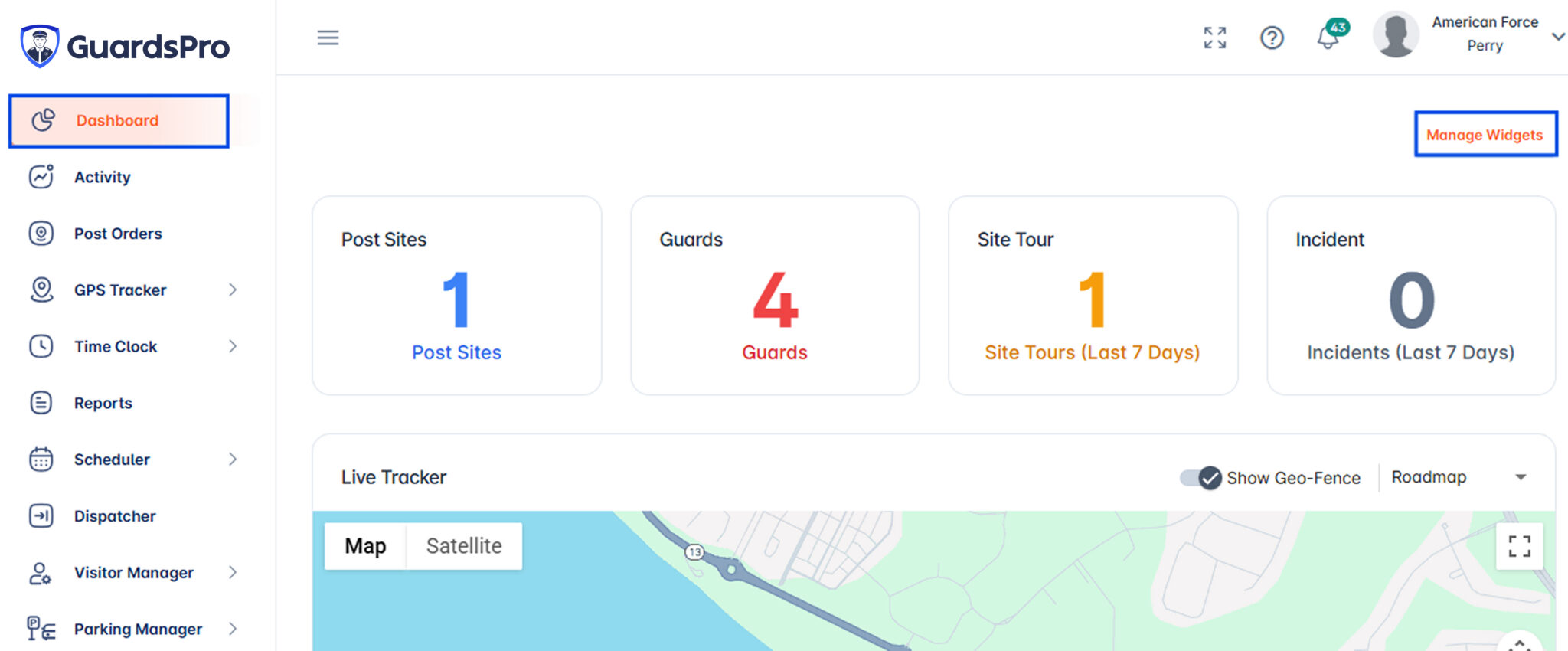
That is why access permissions should be reviewed as part of the broader compliance process.
Security companies need to know who can view information, who can change it, and whether access should be removed when someone changes roles or leaves the organization.
A strong compliance process is not only about keeping records.
It is also about controlling those records responsibly.
Make Compliance Part of Everyday Operations
One of the biggest mistakes security companies can make is waiting until a problem appears before checking whether their records are in order.
A license expires.
A client requests proof of training.
An incident needs to be investigated.
Someone asks for several months of attendance history.
Then the search for documentation begins.
A better approach is to make compliance part of the normal workflow.
Licenses are monitored before expiration.
Training information stays current.
Time and attendance are recorded as work happens.
Incidents are documented promptly.
Post Orders are updated when procedures change.
Records remain organized and accessible.
When these processes happen consistently, companies spend less time trying to rebuild information after the fact.
The Bottom Line
Security company compliance in 2026 is not one task.
It is the ongoing management of guard credentials, training, time records, safety documentation, client procedures, operational records, and access to sensitive information.
And the larger a security operation becomes, the harder those responsibilities are to manage through spreadsheets, reminders, folders, and memory alone.
Technology can make compliance-related information easier to organize, monitor, and retrieve.
But software does not decide what requirements apply.
Security companies still need to understand the laws, regulations, employment rules, contracts, and internal policies relevant to the areas where they operate.
The goal should be simple:
Know what needs to be maintained. Keep it current. And make sure the right records are available when they are needed.
Make Compliance Easier to Manage With GuardsPro
GuardsPro helps security companies keep more of their operational information connected—from guard records and licenses to Post Orders, scheduling, reporting, time tracking, and client activity.
Instead of managing important information across disconnected files and manual processes, teams can maintain a clearer operational record as work happens.
You can start a free 30-day trial of GuardsPro, learn more about GuardsPro, or book a live demo to see how the platform can fit into your security operation.
Sign up within 15 days to unlock an exclusive 15% discount on your subscription.
FAQs
What is security company compliance?
Security company compliance means meeting the licensing, employment, safety, contractual, recordkeeping, and operational requirements that apply to a security firm and its workforce.
What records should a security company keep?
Depending on applicable requirements, records may include guard licenses, training information, schedules, attendance records, payroll information, incident reports, Post Orders, policy acknowledgements, and client documentation.
Why is security guard license management important?
License management helps companies identify upcoming expiration dates and reduce the risk of assigning guards whose required credentials are no longer current.
Are security company compliance requirements the same everywhere?
No. Requirements vary by country, state, province, city, type of security service, and guard responsibilities. Companies should verify the rules that apply wherever they operate.
How does timekeeping affect security company compliance?
Reliable time records help companies manage attendance, payroll, overtime, and other employment-related responsibilities more accurately.
Can security management software guarantee compliance?
No. Software can help organize records, track important information, and make documentation easier to retrieve, but the security company is still responsible for understanding and meeting the requirements that apply to its operation.