Security Officer Duties and Responsibilities Checklist
A security officer’s job goes far beyond watching an entrance or walking around a property.
A professional security officer is responsible for protecting people, property, assets, and information; monitoring for threats; controlling access; conducting patrols; responding to incidents; documenting activity; and following site-specific security procedures.
The exact responsibilities depend on the property, industry, security risks, and post orders. A security officer at a hospital may deal with patient and visitor safety, while an officer at a construction site may focus more heavily on perimeter security, trespassing, and equipment theft.
This guide explains the core security officer duties and responsibilities, provides a practical daily checklist, explains how responsibilities change by industry, and shows how security companies can use technology to make those duties easier to perform and verify.
Quick Answer: What Does a Security Officer Do?
A security officer protects people and property by monitoring the assigned site, controlling access, conducting patrols, identifying suspicious activity, responding to incidents and emergencies according to training and post orders, documenting events, and maintaining a visible security presence.
Depending on the assignment, a security officer may also:
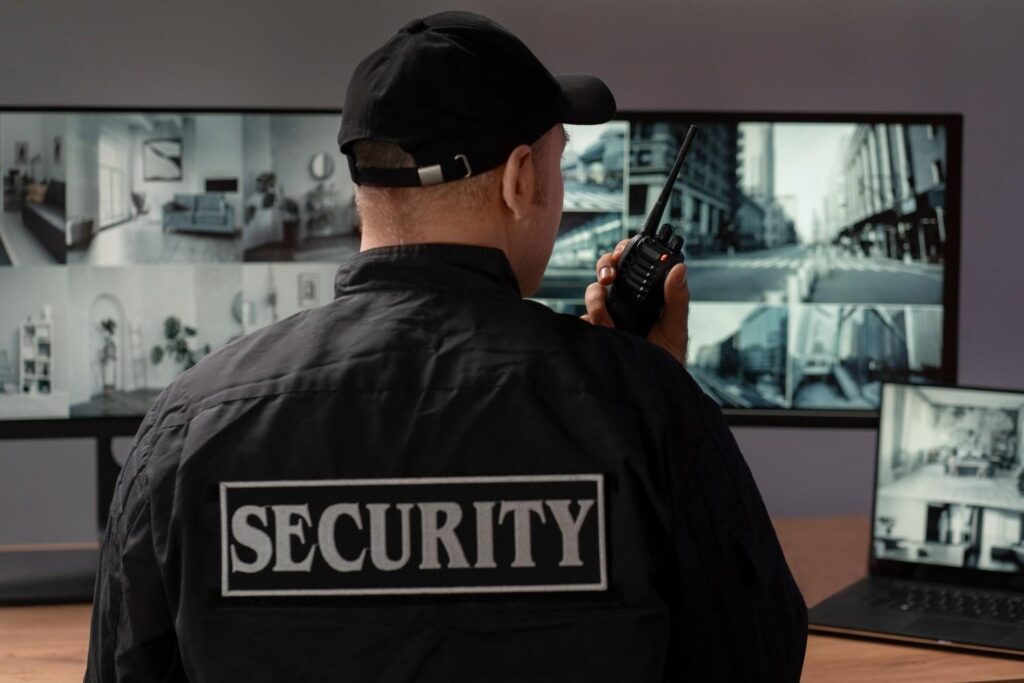
- Monitor CCTV and alarm systems
- Check IDs and credentials
- Manage visitors and contractors
- Conduct foot or vehicle patrols
- Inspect doors, gates, and restricted areas
- Respond to alarms and incidents
- Write daily activity and incident reports
- Enforce site security procedures
- Assist visitors and employees
- Report safety hazards
- Coordinate with supervisors and emergency services
- Perform opening and closing security checks
- Verify patrol checkpoints
- Complete assigned security checklists
The officer’s specific authority and responsibilities should always be defined by the employer, client, site post orders, training, and applicable laws.
What Are the Main Duties of a Security Officer?
Although responsibilities vary by assignment, most security officer roles revolve around these core functions:
- Monitoring and surveillance
- Patrolling the property
- Access control
- Crime and loss prevention
- Incident and emergency response
- Reporting and documentation
- Safety and hazard awareness
- Customer service and assistance
- Following post orders and site procedures
- Communication and shift handover
These responsibilities work together.
A security officer isn’t simply expected to react when something happens. Effective security is also about detecting problems early, preventing incidents where possible, and creating a reliable record of what happened.
1. Monitor and Observe the Property
One of the most fundamental security officer duties is maintaining awareness of what is happening on the property.
Depending on the post, this can include:
- Monitoring entrances and exits
- Observing people and vehicle activity
- Monitoring CCTV
- Watching restricted areas
- Checking alarm notifications
- Looking for suspicious behavior
- Identifying unattended items
- Watching for unauthorized access
- Observing unusual changes in normal site activity
Good monitoring requires more than simply being present.
An effective officer needs to understand what normal activity looks like at the site so unusual behavior or conditions can be identified quickly.
For example, a normally secured door that has been propped open, an unfamiliar vehicle in a restricted area, or an unexpected person inside a closed facility may warrant further attention.
Security officer monitoring checklist
- Monitor assigned areas
- Check designated CCTV feeds
- Watch entrances and exits
- Identify suspicious activity
- Monitor restricted areas
- Check alarm notifications when applicable
- Report unusual conditions
- Document significant observations
2. Conduct Regular Security Patrols
Patrolling is one of the most recognizable security officer responsibilities.
Depending on the assignment, patrols may be conducted:
- On foot
- By vehicle
- Inside buildings
- Around the perimeter
- Through parking areas
- Around construction sites
- Across residential communities
- Through warehouses or industrial facilities
During a patrol, an officer may check:
- Doors and windows
- Gates
- Fences
- Emergency exits
- Lighting
- Parking areas
- Restricted areas
- Equipment
- Fire and safety equipment
- Signs of damage
- Signs of forced entry
- Suspicious activity
- Environmental hazards
Patrols should follow the site’s post orders.
Where appropriate, security companies may use digital guard-tour systems, GPS, QR codes, NFC checkpoints, or other technologies to document patrol activity.
This creates a more reliable record than simply stating that a patrol was completed.
Security patrol checklist
- Follow assigned patrol route
- Check required checkpoints
- Inspect doors and access points
- Check perimeter areas
- Look for damage or tampering
- Identify safety hazards
- Check lighting and visibility
- Report suspicious activity
- Document significant findings
3. Control Access and Entry Points
Access control is another major security officer duty.
At a controlled entrance, an officer may be responsible for determining whether people, vehicles, or contractors are authorized to enter.
Depending on the site, responsibilities can include:
- Checking identification
- Verifying credentials
- Managing visitor sign-in
- Issuing visitor badges
- Checking access permissions
- Monitoring employee entrances
- Controlling vehicle access
- Managing contractor access
- Monitoring deliveries
- Preventing unauthorized entry
- Maintaining visitor records
Access control requires both consistency and good judgment.
An officer should follow the property’s procedures rather than making arbitrary exceptions.
Access-control checklist
- Verify required identification
- Confirm authorization
- Follow visitor procedures
- Issue badges when required
- Monitor restricted entrances
- Document visitors and contractors
- Follow delivery procedures
- Report unauthorized access attempts
4. Deter Theft, Trespassing, and Other Security Threats
A security officer’s value is not limited to responding after a crime occurs.
Visible security presence is itself a preventive measure.
Uniformed officers can make unauthorized activity more difficult and can increase the likelihood that suspicious behavior will be noticed.
Depending on the site, officers may help prevent:
- Theft
- Trespassing
- Vandalism
- Unauthorized access
- Property damage
- Vehicle-related crime
- Workplace disturbances
- Violations of site rules
Prevention starts with understanding the property’s vulnerabilities.
An officer should pay attention to locations where security controls are weak, such as poorly lit areas, unsecured doors, isolated sections, or gaps in perimeter protection.
5. Respond to Security Incidents
When an incident occurs, the security officer may be among the first people on scene.
The appropriate response depends on:
- The type of incident
- Site procedures
- The officer’s training
- The officer’s legal authority
- The level of immediate danger
- Whether emergency services are required
Depending on the situation, responsibilities may include:
- Assessing the situation
- Protecting people from immediate danger
- Calling emergency services when appropriate
- Following emergency procedures
- Securing an area
- Directing people away from a hazard
- Notifying supervisors
- Preserving relevant information
- Documenting the incident
The goal is not to encourage officers to act beyond their training or authority.
A professional officer knows when to intervene, when to observe, when to escalate, and when to request assistance.
6. Handle Emergencies According to Site Procedures
Security officers may also play an important role during emergencies.
Depending on the site, they may assist with:
- Fire emergencies
- Medical emergencies
- Evacuations
- Severe weather
- Suspicious packages
- Security threats
- Power failures
- Facility emergencies
- Missing persons
- Major disturbances
Emergency responsibilities should be clearly defined in the site’s emergency response plan and post orders.
Officers should know:
- Who to contact
- How to report an emergency
- Where emergency equipment is located
- Which areas need to be secured
- Evacuation procedures
- Emergency access routes
- Where to direct responding agencies
- What information needs to be documented
Security officers are not a replacement for police, fire, or medical professionals. Their role is to follow established procedures and support an organized response within the scope of their training and assignment.
7. Write Daily Activity Reports
Reporting is one of the most important—and often overlooked—security officer responsibilities.
A daily activity report, or DAR, provides a record of what happened during a shift.
Depending on the assignment, it may include:
- Shift start and end
- Patrols completed
- Checkpoints visited
- Visitors
- Deliveries
- Observations
- Safety concerns
- Maintenance issues
- Security incidents
- Unusual activity
- Notifications made
- Actions taken
A good report should be:
Accurate + objective + timely + specific.
Instead of writing:
“Everything was fine.”
A stronger report might document that scheduled patrols were completed, entrances were checked, no unauthorized activity was observed, and a specific maintenance issue was reported.
The purpose isn’t to create more paperwork.
It is to create a reliable operational record.
8. Complete Incident Reports
A daily activity report provides a broad record of a shift.
An incident report documents a specific event in greater detail.
A security officer may need to document:
- What happened
- When it happened
- Where it happened
- Who was involved
- What the officer observed
- What actions were taken
- Who was notified
- Whether emergency services were contacted
- Available evidence
- Witness information when appropriate
Reports should remain factual and objective.
Officers should distinguish between:
What they personally observed
and
What someone else reported to them.
This distinction can make security documentation clearer and more useful during later reviews.
9. Identify and Report Safety Hazards
Security officers are often in a position to notice problems before management does.
During patrols, they may identify:
- Broken locks
- Damaged fences
- Poor lighting
- Blocked exits
- Water leaks
- Slip or trip hazards
- Unsecured equipment
- Damaged doors
- Fire hazards
- Suspicious objects
- Other site-specific hazards
Not every issue is a security incident.
But documenting and reporting hazards can still help prevent incidents.
This is one reason security officers should understand the difference between security concerns, safety concerns, and maintenance issues while knowing how to escalate each according to site procedures.
10. Provide Customer Service and Assistance
Security officers are often highly visible representatives of the property or organization.
In a shopping center, hotel, residential community, office building, or corporate campus, visitors may approach a security officer before anyone else.
Officers may:
- Give directions
- Help visitors find locations
- Answer basic questions
- Assist people during emergencies
- Provide information about site procedures
- Help manage difficult situations
- Direct people to the appropriate department
Professionalism matters.
A strong security officer should be able to enforce security policies without unnecessarily creating conflict.
The objective is to be firm, professional, respectful, and helpful.
11. Follow Post Orders and Site-Specific Procedures
Not every security assignment is the same.
That is why post orders are critical.
Post orders define what an officer is expected to do at a particular location.
They may specify:
- Patrol frequency
- Required checkpoints
- Access procedures
- Visitor policies
- Emergency contacts
- Reporting requirements
- Opening and closing procedures
- Equipment checks
- Restricted areas
- Escalation procedures
- Client-specific requirements
A security officer may have the same job title at two different sites but have significantly different daily responsibilities.
The post orders should therefore be treated as an operational guide—not an optional document.
12. Maintain Security Equipment
Depending on the assignment, officers may be responsible for checking and properly using equipment such as:
- Radios
- Mobile devices
- Flashlights
- Access-control equipment
- Patrol devices
- Keys
- Safety equipment
- CCTV systems
- Other site-specific equipment
At the beginning of a shift, officers should know whether required equipment is available and functioning.
Problems should be reported rather than ignored.
13. Communicate With Supervisors and the Next Shift
Security depends heavily on communication.
Officers may need to communicate with:
- Supervisors
- Other security officers
- Property management
- Employees
- Contractors
- Emergency services
- Clients
Communication is particularly important during shift changes.
An effective handover should identify:
- Incidents from the previous shift
- Unresolved issues
- Equipment problems
- Visitors or contractors still on site
- Areas requiring additional attention
- Instructions from management
- Any unusual activity
A good handover prevents the incoming officer from starting the shift without important context.
Security Officer Duties by Industry
The core responsibilities remain similar, but the priorities change depending on the environment.
| Security Environment | Key Security Officer Responsibilities |
|---|---|
| Commercial buildings | Access control, visitor management, CCTV monitoring, after-hours patrols, incident reporting |
| Retail stores | Theft prevention, customer safety, surveillance, access control, incident response |
| Shopping centers | Common-area patrols, parking security, tenant support, incident response, visible deterrence |
| Construction sites | Perimeter patrols, access control, equipment/material protection, after-hours monitoring |
| Residential communities | Gate access, visitor management, vehicle monitoring, common-area patrols, resident assistance |
| Warehouses | Perimeter security, loading-area monitoring, access control, inventory-related security |
| Healthcare facilities | Access control, visitor management, emergency support, protection of staff and patients |
| Events | Entry screening, crowd observation, access control, emergency coordination |
| Industrial facilities | Perimeter protection, access control, patrols, restricted-area monitoring |
| Educational campuses | Access management, patrols, suspicious activity reporting, emergency support |
The officer should be trained and assigned according to the risks of the specific environment.
Security Officer Daily Duties Checklist
Use the following checklist as a practical starting point for a security officer’s shift.
Before the Shift
- Arrive on time and in proper uniform
- Check in according to site procedure
- Receive handover from the previous officer
- Review post orders
- Review current site alerts or instructions
- Check radio/mobile device
- Check required keys and equipment
- Review unresolved incidents
- Confirm assigned patrol areas
During the Shift
Monitoring
- Monitor assigned areas
- Monitor CCTV when required
- Watch entrances and exits
- Identify suspicious activity
- Monitor restricted areas
Patrols
- Complete assigned patrols
- Visit required checkpoints
- Check doors and windows
- Inspect perimeter
- Check parking areas
- Look for damage or hazards
- Report unusual conditions
Access Control
- Verify authorized personnel
- Follow visitor procedures
- Monitor employee/contractor access
- Follow delivery procedures
- Report unauthorized entry attempts
Incidents
- Respond according to post orders
- Notify the appropriate person
- Contact emergency services when required
- Secure the area when appropriate
- Document the event
Reporting
- Complete daily activity reports
- Complete incident reports when required
- Attach relevant evidence when permitted
- Record important observations
- Escalate unresolved issues
End of Shift
- Complete required reports
- Review unresolved issues
- Check equipment
- Brief the incoming officer
- Complete shift handover
- Clock out according to procedure
Security Officer Shift Handover Checklist
A proper handover deserves its own checklist because important information can be lost between shifts.
Outgoing Officer
- Explain incidents from the shift
- Identify unresolved issues
- Report equipment problems
- Explain unusual activity
- Identify expected visitors or contractors
- Communicate management instructions
- Highlight areas requiring additional attention
Incoming Officer
- Review handover
- Confirm current instructions
- Check required equipment
- Review open incidents
- Confirm assigned post
- Begin shift according to post orders
Digital passdown logs can make this process more consistent by giving incoming officers and supervisors a record of important information rather than relying entirely on verbal communication.
What Should a Security Officer Document?
A useful rule is:
If an event, observation, action, or condition could matter to security operations, the officer should know how and when to document it according to site procedures.
Common examples include:
- Security incidents
- Suspicious activity
- Unauthorized access attempts
- Patrol completion
- Checkpoint visits
- Visitor activity
- Safety hazards
- Property damage
- Equipment problems
- Emergency responses
- Notifications
- Unusual conditions
- Instructions received from management
Reports should be factual and avoid speculation.
Security Officer vs. Security Guard: What’s the Difference?
The terms security officer and security guard are often used interchangeably, although specific job titles and responsibilities can vary by employer, state, and assignment.
In practice, both roles can involve:
- Monitoring
- Patrolling
- Access control
- Incident response
- Reporting
- Crime deterrence
- Protecting people and property
The title alone does not tell you everything about the job.
The actual responsibilities are determined by the assignment, employer, client requirements, training, post orders, and applicable regulations.
For this reason, when hiring or managing security personnel, focus on the scope of the assignment and required duties, not just the job title.
What Makes a Good Security Officer?
A good security officer needs more than physical presence.
Key qualities include:
1. Situational awareness
The ability to notice changes and recognize unusual activity.
2. Good judgment
Knowing when to act, when to observe, and when to escalate.
3. Communication
Communicating clearly with supervisors, clients, visitors, employees, and emergency responders.
4. Integrity
Following procedures even when no one is watching.
5. Professionalism
Maintaining appropriate behavior, appearance, and communication.
6. Composure
Remaining calm during stressful or confrontational situations.
7. Attention to detail
Noticing small problems before they become larger incidents.
8. Reliability
Showing up prepared and completing assigned responsibilities consistently.
9. Report-writing ability
Creating accurate, objective, timely documentation.
10. Technology skills
Using mobile reporting, communication, access-control, GPS, guard-tour, or other site-specific systems effectively.
How Technology Helps Security Officers Perform Their Duties
Technology should not replace good security practices.
It should make them easier to perform, document, and manage.
Modern security management platforms can connect several parts of a guard’s daily workflow.
For example:
Time tracking
→ confirms when the officer starts and ends a shift.
GPS/location tracking
→ provides visibility into field deployment where appropriate.
Guard tours and checkpoints
→ help verify that assigned patrol points were visited.
Digital post orders
→ give officers current site-specific instructions.
Mobile reporting
→ lets officers document incidents and daily activity from the field.
Passdown logs
→ help transfer important information between shifts.
Real-time communication
→ connects officers with supervisors.
Client reporting
→ gives security companies a more organized way to demonstrate service delivery.
GuardsPro provides tools for managing guard check-ins, assigned tasks, site tours, reports, and field operations. Its platform is designed to give security companies visibility into whether guards are checked in, performing assigned tasks, conducting tours, and submitting reports.
GuardsPro’s assigned checklist functionality can also deliver site-specific tasks to guards through the mobile app and allow supervisors to monitor completion through the web portal. Examples include routine patrols, checking fire extinguishers, locking or unlocking doors, reporting unusual activity, and verifying visitor logs.
The important point is that technology should support the officer’s responsibilities—not create additional complexity.
How Security Companies Can Improve Duty Accountability
Knowing what security officers should do is only the first step.
The bigger operational question is:
How do you know those duties were actually completed?
A security company can improve accountability by connecting responsibilities to measurable activities.
For example:
| Responsibility | How to Verify |
|---|---|
| Start shift | Digital time clock |
| Report to site | Site check-in |
| Conduct patrol | GPS/guard tour |
| Visit checkpoints | QR/NFC checkpoint scan |
| Follow post orders | Digital checklist |
| Document incidents | Incident report |
| Complete shift activity | Daily activity report |
| Communicate important issues | Passdown log |
| Respond to emergencies | Alert/incident record |
| Complete handover | Digital passdown |
This creates a connection between what the officer is expected to do and what the security company can actually verify.
That distinction is especially important when managing multiple sites and large teams.
Security Officer Duties: Manager’s Checklist
Security companies and clients can use this checklist when reviewing an officer’s assignment.
Assignment
- Are post orders clearly defined?
- Does the officer understand the site’s security risks?
- Are responsibilities appropriate for the location?
- Are emergency procedures clear?
Patrols
- Are patrol routes defined?
- Are checkpoints established?
- Are patrols completed consistently?
- Is patrol activity documented?
Access Control
- Are visitor procedures clear?
- Are restricted areas identified?
- Are access rules consistently enforced?
Reporting
- Are daily reports completed?
- Are incidents documented promptly?
- Are reports factual and detailed?
- Can supervisors review submitted reports?
Communication
- Are shift handovers documented?
- Can officers contact supervisors?
- Are important alerts communicated quickly?
Accountability
- Are officers checked in?
- Can supervisors see task completion?
- Are patrols verifiable?
- Are unresolved issues followed up?
Common Mistakes in Managing Security Officer Duties
Even when a security company has experienced officers, unclear processes can create problems.
Mistake 1: Giving officers vague responsibilities
“Watch the property” is not a sufficient operational instruction.
Define what officers need to monitor, inspect, report, and escalate.
Mistake 2: Using the same checklist for every site
A construction site and corporate office do not have identical security risks.
Build checklists around each property’s requirements.
Mistake 3: Relying entirely on paper reports
Paper records can be difficult to review, organize, and verify at scale.
Digital reporting can make field documentation more accessible and structured.
Mistake 4: Measuring activity instead of outcomes
A guard completing ten patrols doesn’t automatically mean the site is secure.
Use patrol data alongside incident trends, observations, response performance, and client feedback.
Mistake 5: Failing to update post orders
Properties change.
Tenants change. Access points change. Risks change.
Post orders should be reviewed whenever the security requirements of the site change.
Frequently Asked Questions About Security Officer Duties
What are the 10 main duties of a security officer?
The most common security officer duties include monitoring and surveillance, patrolling, access control, crime prevention, incident response, emergency response, reporting, hazard identification, customer assistance, and following site-specific post orders.
What does a security officer do every day?
A typical security officer may begin by reviewing post orders and receiving a shift handover. During the shift, they monitor the property, conduct patrols, control access, respond to incidents, assist visitors, identify hazards, and complete required reports. At the end of the shift, they document outstanding issues and hand over information to the next officer.
What is the most important responsibility of a security officer?
The primary responsibility is to protect people and property within the scope of the officer’s assignment. How that is accomplished depends on the site and may include prevention, monitoring, access control, patrols, emergency response, and documentation.
What should a security officer do during an emergency?
A security officer should follow the site’s emergency procedures and their training, prioritize life safety, notify the appropriate emergency services or personnel when required, communicate relevant information, and document the incident. Officers should not act outside their training or authority.
What should be included in a security officer daily checklist?
A daily checklist can include shift check-in, equipment checks, post-order review, patrols, checkpoint verification, access control, CCTV monitoring, incident response, hazard reporting, daily activity reports, and shift handover.
What should a security officer include in an incident report?
An incident report should generally document what happened, when and where it happened, what the officer observed, actions taken, notifications made, and other relevant factual information required by the site’s procedures. Officers should avoid speculation and clearly distinguish direct observations from information reported by others.
Do security officers need to patrol?
Many security assignments include patrols, but not every post requires the same patrol schedule or method. Patrol responsibilities should be defined by the assignment and site post orders.
Can technology verify whether a security officer completed their duties?
Technology can help verify specific activities. For example, digital time tracking can document attendance, GPS can provide location information, guard-tour systems can verify checkpoints, and digital reports can document incidents and activities. The technology should be matched to what the security company actually needs to verify.
What is the difference between security officer duties and responsibilities?
A duty is a specific task, such as conducting a patrol or checking an ID. A responsibility is the broader obligation behind those tasks, such as protecting people and property, following procedures, exercising good judgment, and maintaining professional conduct.
Can this checklist be used as a security officer job description?
It can be used as a starting framework, but a formal job description should be customized to the employer, site, position, required qualifications, applicable laws, training requirements, and specific post orders.
Downloadable Security Officer Duties Checklist
If you are a security company manager, supervisor, or operations director, use this checklist to standardize expectations across your sites.
Before Shift
☐ Check in
☐ Review post orders
☐ Receive handover
☐ Check equipment
☐ Review alerts and open issues
During Shift
☐ Monitor assigned areas
☐ Conduct required patrols
☐ Verify checkpoints
☐ Monitor access points
☐ Watch CCTV when required
☐ Identify suspicious activity
☐ Report safety/security hazards
☐ Assist visitors when appropriate
☐ Respond to incidents according to procedure
☐ Complete daily activity reports
End of Shift
☐ Complete incident reports
☐ Review unresolved issues
☐ Submit required documentation
☐ Check equipment
☐ Brief incoming officer
☐ Complete handover
☐ Clock out
How GuardsPro Helps Security Companies Manage Officer Duties
A checklist is useful—but managing hundreds of checklist items across multiple sites can become difficult when everything is handled manually.
GuardsPro helps security companies connect officer responsibilities with operational workflows.
Security managers can use the platform to manage:
- Guard check-in and check-out
- Assigned tasks
- Digital checklists
- Guard tours
- Patrol activity
- Reports
- Incident documentation
- Communication
- Passdown information
- Field operations
This gives managers greater visibility into whether assigned responsibilities are being completed and provides officers with clearer instructions about what is expected during a shift. GuardsPro’s platform specifically supports task and tour visibility as well as report submission.
The goal isn’t to add more work for security officers.
It’s to make expectations clearer, reduce unnecessary paperwork, and give security companies a better way to verify service delivery.
Final Takeaway
Security officer duties go far beyond standing at an entrance.
A professional security officer is expected to observe, prevent, patrol, control access, respond, communicate, document, and follow site-specific procedures.
The most effective security programs make those expectations clear before the officer starts the shift.
That means:
Clear post orders → Clear checklists → Consistent execution → Digital verification → Better supervision → Better client visibility
For security companies, the challenge is not simply creating a list of duties.
The challenge is making sure every officer understands what to do, when to do it, how to document it, and how supervisors can verify that it was completed.
That’s where a combination of clear procedures, trained officers, and the right security management technology can make a measurable difference.
Define the duty.
Assign the task.
Verify the work.
Document the result.

Strengthen How Your Guards Perform Their Duties
A security guard’s role is far more demanding than standing watch. Done well, it combines observation, prevention, response, documentation, and service — each duty backed by a deeper responsibility to protect the people and property in the guard’s care.
For security companies, the challenge isn’t just knowing these duties — it’s making sure they’re performed consistently and provably across every guard and every shift. That’s where the right tools make the difference.
GuardsPro helps security companies support their guards and document every duty as it’s performed — from patrols and checkpoints to daily activity reports and incidents.