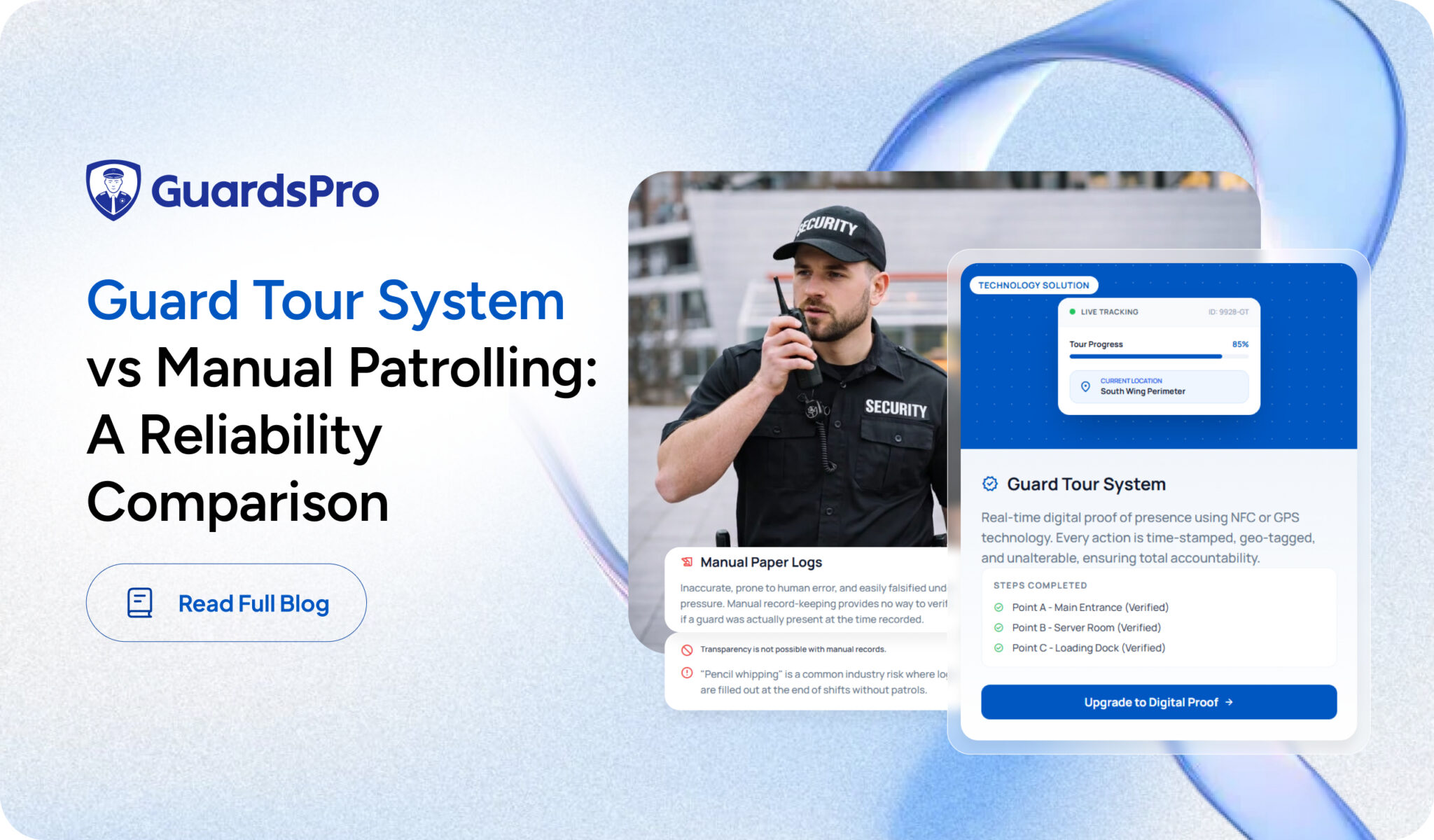
Reliability is the foundation of every successful security operation. Clients don’t just expect guards on-site—they expect consistent patrols, verified activity, and proof of performance. Yet many security companies still rely on manual processes to manage one of the most critical aspects of their service: patrolling.
As the industry evolves, the comparison between a Guard Tour System and manual patrolling has become unavoidable. Which approach delivers better accuracy, stronger accountability, and greater trust?
Let’s take a closer look.
Understanding Manual Patrolling
Manual patrolling is the traditional method where guards walk assigned routes and record their activities using paper logbooks or provide verbal updates. In some cases, supervisors conduct occasional checks to ensure compliance.
While this approach has been used for decades, manual patrolling relies heavily on human memory and discipline. Patrols may be completed, but the ability to prove they were done correctly—and on time—remains limited.
This lack of verifiable data often creates blind spots for managers and clients alike.
What Is a Guard Tour System?
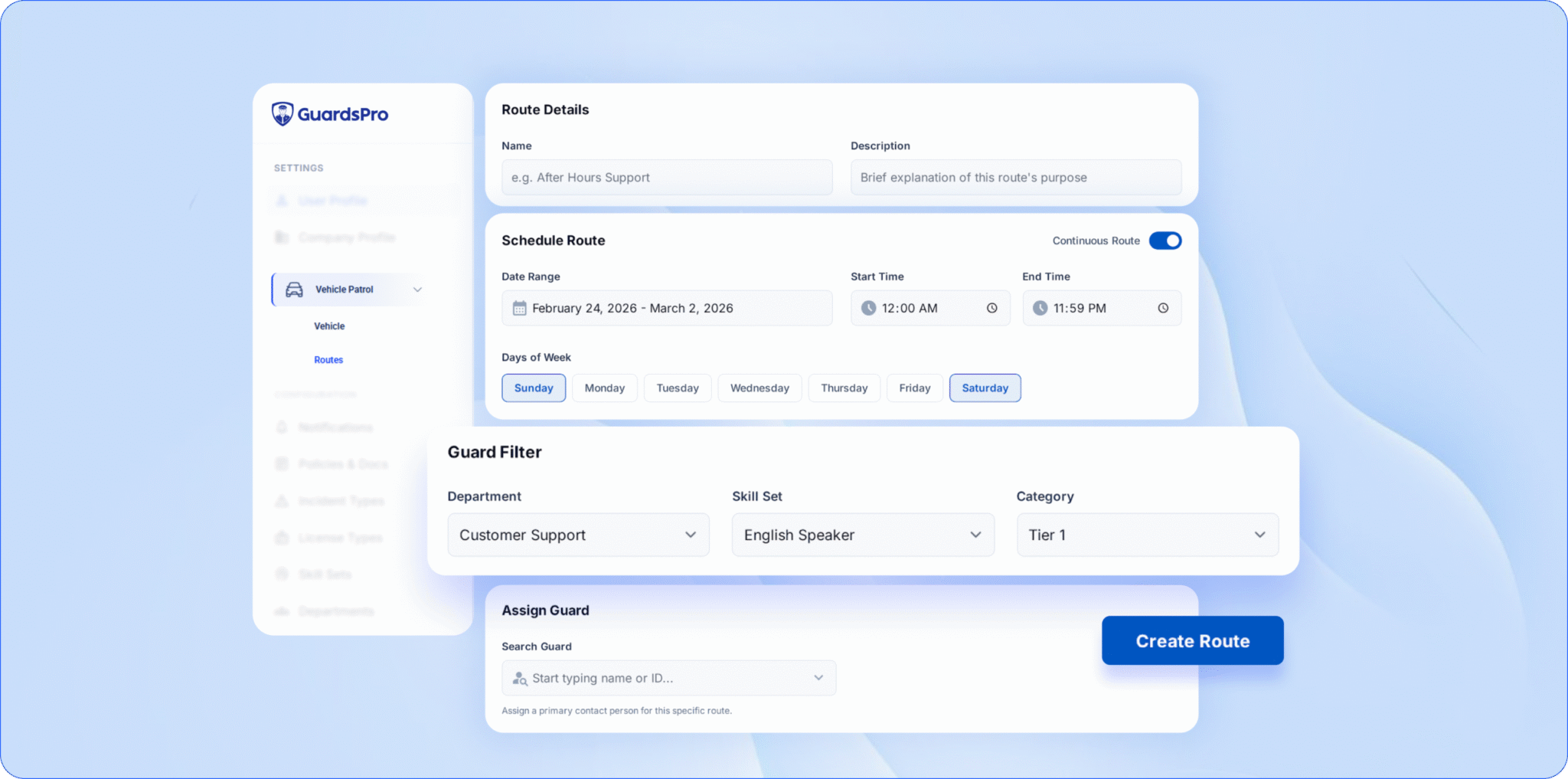
A Guard Tour System digitizes the entire patrol process. Guards use mobile devices to scan checkpoints, follow predefined patrol routes, and log activities automatically. Every action is recorded with time stamps, location data, and guard identification.
Instead of assuming patrols are happening, managers gain real-time visibility and confirmation.
This shift from assumption to verification is what sets modern systems apart.
Reliability Comparison: Technology vs Tradition
1. Proof Over Assumptions
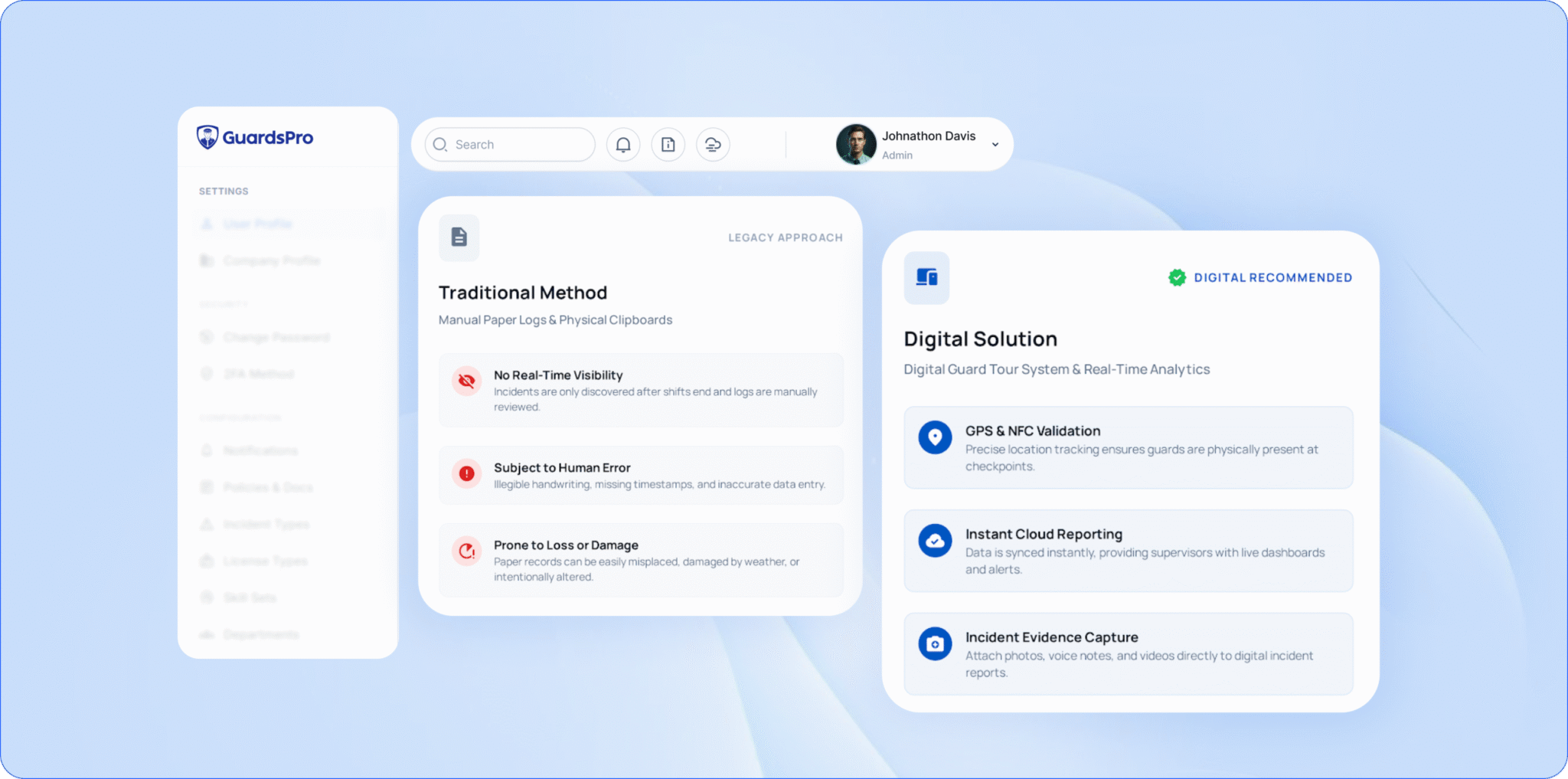
Paper logs can be filled out after the fact or completed inaccurately—sometimes unintentionally, sometimes under pressure. This makes it difficult to confirm whether patrols were conducted as required.
A Guard Tour System provides undeniable patrol verification. Each checkpoint scan confirms:
- When the patrol occurred
- Where it happened
- Whether any steps were skipped
This level of transparency simply isn’t possible with manual records.
2. Reduced Human Error
Fatigue, long shifts, and distractions can affect even the most experienced guards. Manual entries are prone to mistakes, missing information, or unclear handwriting.
Digital systems automate data capture, reducing dependency on memory and ensuring consistent, accurate records across every shift.
3. Real-Time Security Guard Tracking
With manual processes, supervisors usually review patrol logs after the shift ends—when it’s too late to address missed patrols or delayed responses.
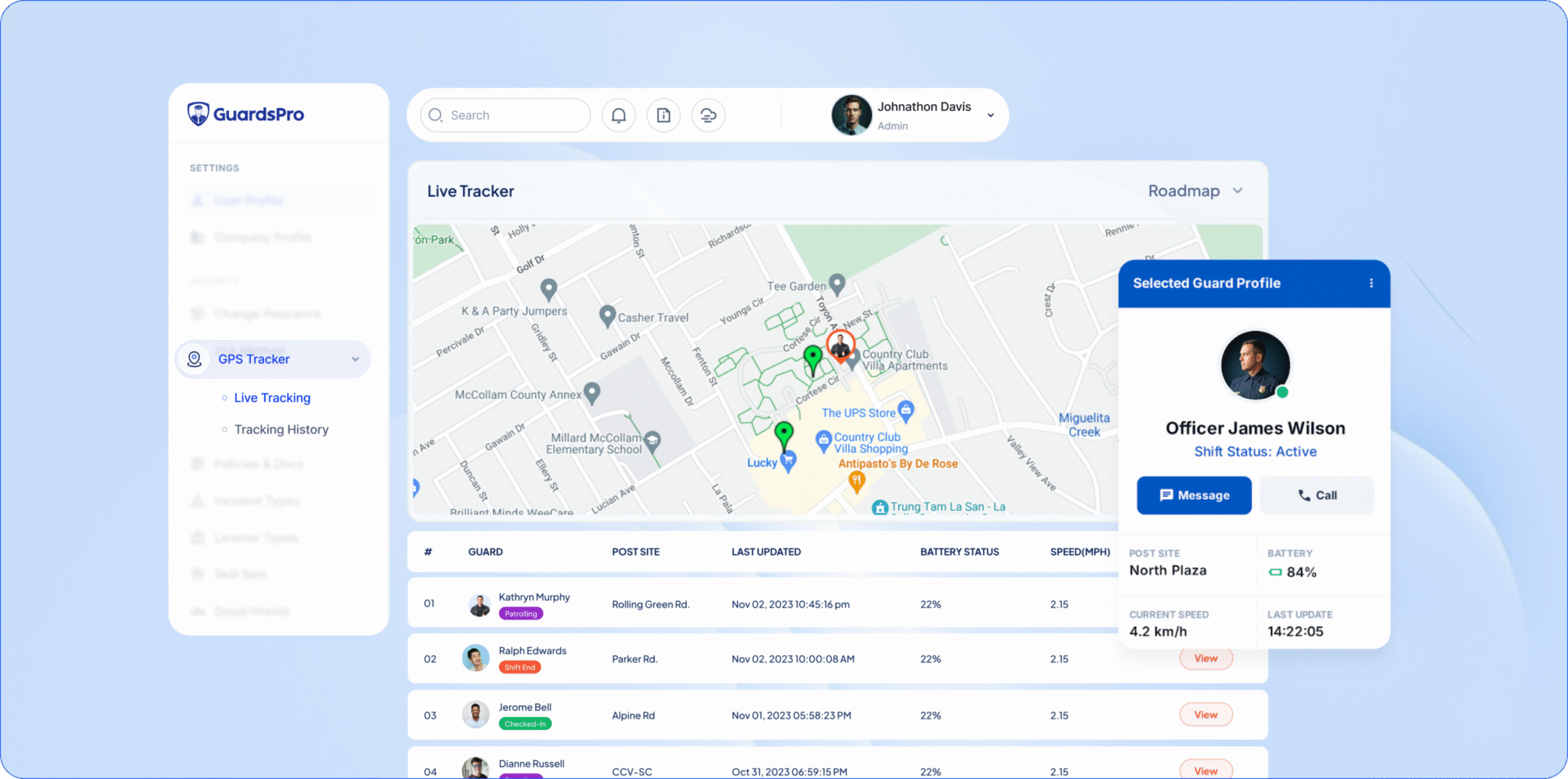
Modern solutions enable security guard tracking in real time. Managers can instantly see:
- Patrol progress
- Missed checkpoints
- Delays or unusual activity
This allows proactive intervention rather than reactive damage control.
4. Stronger Guard Accountability
Accountability is critical—not just for performance, but for compliance and legal protection. Inconsistent or missing patrol records can expose security companies to disputes and audits.
Digital patrol records create a clear, time-stamped audit trail that strengthens guard accountability and protects both the service provider and the client.
5. Increased Client Confidence
Today’s clients expect transparency. Handwritten logs rarely inspire confidence, especially for high-risk or high-value sites.
When patrol data can be shared digitally, clients gain clear insight into service delivery. This transparency builds trust, reinforces contract compliance, and improves long-term client retention.
6. Operational Efficiency at Scale
Manual patrolling creates extra administrative work—collecting logbooks, validating entries, and preparing reports manually.
Digital patrol systems automatically compile data into reports and dashboards, saving hours of administrative effort and allowing managers to focus on improving operations instead of chasing paperwork.
Is Manual Patrolling Still Relevant?
Manual methods may work for very small or temporary operations, but as teams grow and client expectations increase, their limitations become clear.
In contrast, a Guard Tour System scales effortlessly, offering better control, visibility, and consistency without increasing management workload.
Final Verdict: Which Is More Reliable?
When reliability is measured by accuracy, verification, and accountability, the difference is clear.
- Manual patrolling depends on trust and delayed reporting
- A Guard Tour System delivers real-time proof, automated tracking, and verifiable performance
For modern security operations, reliability is no longer optional—it’s expected.

Closing Thoughts
As security companies compete for larger contracts and higher-value clients, relying on outdated patrol methods becomes a liability. Digital guard tour solutions don’t just improve patrol execution—they strengthen trust, reduce risk, and future-proof security operations.
In today’s environment, choosing technology over tradition isn’t just smarter—it’s essential.
Start your free 30-day trial of GuardsPro today and see the difference it can make.
Sign up within 15 days to unlock an exclusive 15% discount on your subscription.
Want a walkthrough instead?
Book a live demo and discover how GuardsPro supports everything from scheduling and dispatch to mobile reporting.
Got feedback or questions?
Reach out to us anytime—we’d love to hear from you. Your feedback helps us improve and better support teams like yours.