Night shifts bring a different set of challenges for security guards.
Visibility is lower. Sites may be quieter and more isolated. Fewer people may be nearby to assist. And guards may spend long periods patrolling parking areas, buildings, perimeters, or remote sections of a property alone.
Add fatigue to the mix, and even routine duties can become more difficult.
That is why security guard night shift safety should involve more than telling guards to stay alert. Security companies need clear procedures, realistic patrol plans, reliable communication, and better ways to stay connected to guards in the field.
Technology can support all of these areas when it is built into a strong safety process.
Give Guards Clear Instructions Before the Shift
Night guards should know exactly what is expected before they begin.
Post orders should explain patrol requirements, restricted areas, access procedures, emergency contacts, known site risks, and what to do when something unusual happens.
Digital instructions make this information easier to access in the field than relying entirely on printed binders or verbal handovers.
GuardsPro includes Post Orders among its field-management capabilities, helping companies keep site-specific instructions available to guards. Explore more of the available GuardsPro features.
Clear instructions reduce uncertainty and give guards something reliable to refer back to when conditions change during the night.

Plan Patrols Around Actual Site Risks
A night patrol should not simply copy the daytime routine.
Poorly lit parking areas, loading docks, isolated entrances, emergency exits, and remote parts of a property may require additional attention after dark.
Supervisors should consider where guards may be alone, where visibility is limited, and whether the patrol route gives guards enough time to complete checks safely.
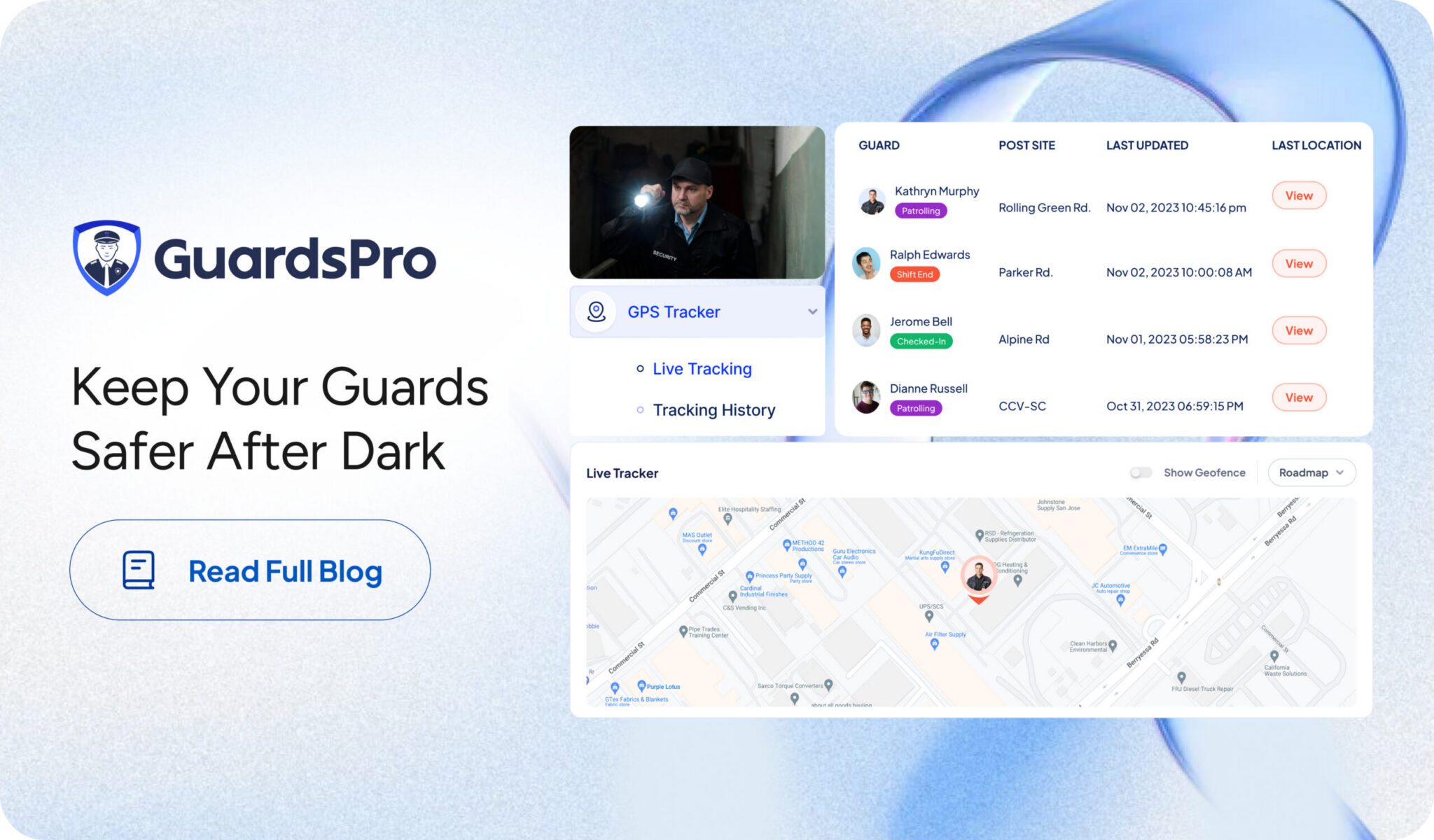
Security guard GPS tracking and geofencing can provide additional context by helping supervisors understand guard movement and designated site boundaries.
GuardsPro’s GPS tracking can support this broader view of field activity.
For a deeper look at the safety side of location technology, see the previously published GuardsPro article Security Guard GPS Tracking: Safety and Accountability Benefits.

Keep Guards Connected to the Back Office
Night guards should not feel like they disappear from view once they leave the office.
They need a reliable way to receive updates, communicate with supervisors, review post information, and request support when necessary.
The GuardsPro Guard Mobile App gives guards access to schedules, Post Orders, reporting, messaging, GPS tracking, site tours, and a Panic Button that can alert back-office users with the guard’s location.
That connection becomes especially valuable when guards are working alone or across large properties.
Technology should not replace regular supervisor communication. It should make it easier for guards to reach support when they need it.

Watch for Fatigue Before It Becomes a Safety Problem
A covered shift is not necessarily a safe shift.
Repeated overtime, back-to-back assignments, long overnight hours, and frequent call-out coverage can reduce concentration and increase fatigue.
Security companies should pay attention to how often the same reliable guards are being asked to fill gaps and whether guards are getting reasonable recovery time between shifts.
Better security workforce scheduling can help managers see staffing needs earlier instead of repeatedly relying on last-minute overtime.
GuardsPro’s Scheduler can help companies organize guard assignments and workforce coverage across their operation.
High-performing guards should not become the default solution to every uncovered shift.
Protecting guard wellbeing is part of protecting guard safety.

Make Hazard and Incident Reporting Easy
Night guards are often the first people to notice problems that others will not see until morning.
A broken exterior light. An unsecured door. A damaged fence. A blocked emergency exit. Suspicious activity around a parking area.
Those observations should be easy to document while the details are still fresh.
Digital security guard reporting gives guards a way to record incidents, hazards, observations, and supporting evidence from the field instead of waiting until the end of a long shift.
GuardsPro’s Reporting help connect field reporting with the wider security operation. Guards can also submit reports directly through the mobile app, including supporting media when required.
The easier it is to report a developing risk, the sooner supervisors can decide what needs attention.

Give Guards a Fast Way to Call for Help
Night guards may sometimes face situations where they need immediate support from the back office.
That is where a Panic Button can add another layer of protection.
With the GuardsPro Guard Mobile App, guards can use the Panic Button to quickly alert back-office users and share their location when they need assistance.
This can be especially useful for guards working alone, patrolling isolated areas, or responding to unexpected activity after hours.
The Panic Button should support, not replace, your company’s emergency procedures. Guards should still know who to contact, when to escalate, and when emergency services are required.

Use Technology to Support, Not Replace, Safety Procedures
Technology is most useful when it supports a clear process.
GPS tracking cannot replace supervisor awareness. A Panic Button cannot replace emergency procedures. Digital reports cannot replace a guard’s judgment. And geofencing cannot determine whether every situation is safe.
The purpose of guard technology is to give teams better information and faster ways to communicate.
GuardsPro brings capabilities such as tracking, Post Orders, patrols, reporting, notifications, and mobile communication into one wider security management platform.
Security companies still need to decide how those tools should be used during night operations and make sure every guard understands the process.
The Bottom Line
Night work will always require extra awareness.
But security companies can reduce unnecessary risk by giving guards clearer instructions, planning safer patrols, maintaining reliable communication, managing fatigue, and making it easier to report hazards.
Strong security guard night shift safety comes down to making sure guards know:
Where they should be. What they should do. What risks to watch for. And who is there to support them when something changes.
Technology can make that easier, but the safety process around it matters just as much.
Support Safer Night Operations With GuardsPro
GuardsPro helps security companies keep guards and supervisors connected throughout the shift.
From field tracking and Post Orders to patrols, reporting, communication, and workforce management, GuardsPro gives teams a more connected way to manage overnight security operations.
Start your free 30-day trial of GuardsPro today.
Sign up within 15 days to unlock an exclusive 15% discount on your subscription.
Want to see how GuardsPro can simplify daily guard operations? Book a live demo.
FAQs
Why are night shifts more challenging for security guards?
Night shifts can involve lower visibility, fewer people on-site, isolated patrol areas, and greater fatigue. These conditions make clear procedures and reliable supervisor support especially important.
How can security companies improve security guard night shift safety?
Companies can improve security guard night shift safety by identifying site risks, providing clear instructions, planning realistic patrol routes, maintaining communication, monitoring workloads, and establishing clear emergency and escalation procedures.
How can GPS tracking support guards working at night?
GPS tracking can give supervisors additional visibility into where checked-in guards are working. Tracking information can also provide useful context when a supervisor needs to understand field activity.
How can security companies reduce night-shift fatigue?
Managers should watch repeated overtime, long shifts, frequent call-out coverage, and recovery time between assignments. More balanced scheduling can help prevent reliable guards from continually carrying excessive workloads.
Why is incident reporting important during night shifts?
Night guards may identify hazards or unusual activity when few other people are present. Prompt digital reporting helps preserve important details and gives supervisors information they can use to determine what needs attention.
Should technology replace night-shift check-ins with supervisors?
No. Technology should support communication and visibility rather than replace active supervision. Regular check-ins, clear escalation procedures, and accessible support remain important for night-shift guards.