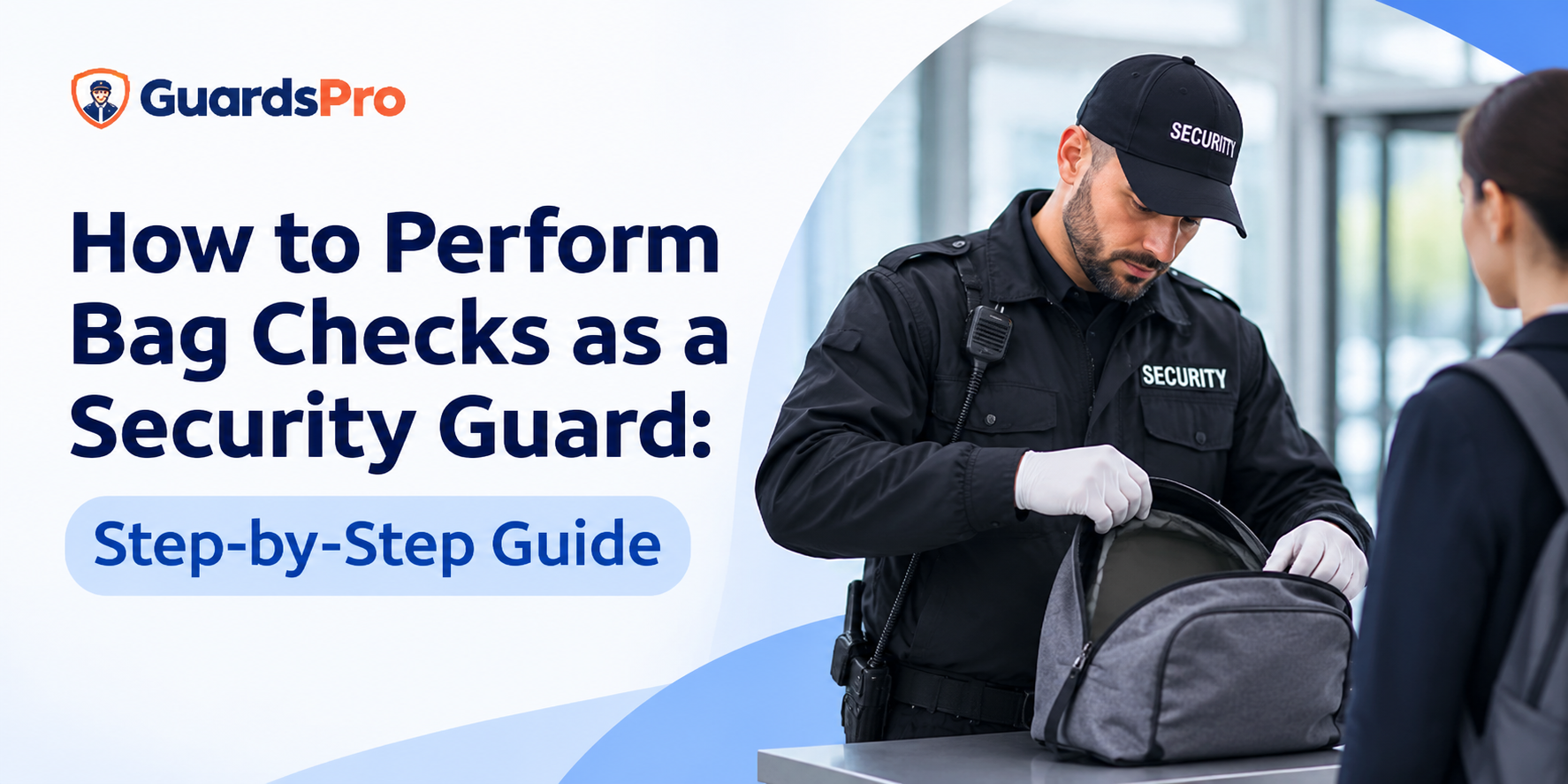
Bag checks are a common part of security operations at event venues, commercial buildings, warehouses, and other properties with controlled access. When performed correctly, they help security teams identify prohibited items, maintain entry requirements, and protect people and property.
But conducting a bag check involves more than opening a backpack and looking inside. Security guards must follow site-specific procedures, respect personal belongings, maintain a safe inspection environment, and know when to involve a supervisor.
Whether you’re a new security guard learning checkpoint procedures or a supervisor responsible for training your team, this guide explains how to perform bag checks safely, professionally, and consistently.
What is a bag check in security?
A security bag check is an inspection of a person’s bag or personal belongings to identify items that are prohibited under a property’s access policy.
Depending on the site, guards may inspect backpacks, purses, handbags, briefcases, or other bags brought through an entry checkpoint.
Bag checks are commonly used at:
- Event venues: To screen bags for items prohibited by the event’s entry policy.
- Warehouses and industrial facilities: To support authorized employee and visitor screening procedures.
- Corporate buildings: To enforce access requirements where bag screening is part of site policy.
- Retail properties: To support applicable entry or exit procedures within the guard’s authorized role.
- Restricted-access facilities: To follow additional screening requirements established for that location.
The purpose of a bag check is not to search belongings without justification. It is to carry out an authorized security procedure while treating everyone fairly and respectfully.
How to perform bag checks as a security guard: 8 steps
Every property has different rules, but the following steps provide a practical foundation for a professional bag inspection procedure.
1. Understand the site’s bag inspection policy
Before starting checkpoint duties, review the post orders and screening instructions provided by your supervisor.
You should know:
- Which individuals or bags require inspection
- What items are prohibited
- Whether the process is voluntary or a condition of entry
- What inspection methods and equipment are authorized
- How to handle refusals or prohibited items
- Who to contact if a situation requires escalation
For example, an event venue may restrict oversized bags, while a warehouse may have separate procedures for employees, visitors, and contractors.
Never assume that the bag-check rules at one property apply to another.
2. Prepare a safe and organized inspection area
A well-organized checkpoint makes bag checks easier for both security guards and visitors.
Before screening begins, check that the inspection area has adequate lighting, a clear entry route, and a stable surface for examining bags.
If your site uses inspection tables, trays, flashlights, or electronic screening equipment, confirm that they are ready for use.
Keep the area clear of unnecessary obstacles. If possible, maintain a separate space for people who need additional assistance or supervisor review.
A clean, organized checkpoint can also reduce confusion when several people are waiting to enter.
3. Explain the procedure and obtain permission
Communication is one of the most important parts of a professional bag check.
Greet the individual politely, explain the screening requirement, and request permission in accordance with the site’s policy and applicable law.
For example, you might say:
“Good morning. Bag inspections are required for entry to this facility. May I check your bag, please?”
Avoid aggressive language or unnecessarily confrontational instructions.
If a person asks why their bag is being checked, explain the entry policy calmly.
Security guards should understand the limits of their authority. Private security personnel do not automatically have the same search powers as law enforcement officers. Consent, property rules, employment policies, contractual requirements, and local law can all affect what is permitted.
If permission is refused, follow the established procedure rather than attempting to force a search.
4. Ask the person to open the bag
Once the inspection is authorized, ask the owner to place the bag on the inspection surface and open it.
Whenever possible, have the owner open compartments and move belongings to make the contents visible.
This helps maintain appropriate boundaries and reduces unnecessary physical contact with personal items.
Remember to:
- Keep the bag within the owner’s view.
- Avoid reaching into compartments you cannot clearly see.
- Request assistance if the bag contains an unfamiliar or potentially hazardous item.
- Follow approved handling procedures rather than improvising.
If the person has a disability or needs assistance, follow the site’s accessibility procedures and offer reasonable assistance without compromising safety.
5. Inspect the bag carefully and systematically
A systematic inspection helps guards follow the same standards rather than making inconsistent decisions under pressure.
Begin with the main compartment, then review other compartments or pockets covered by the authorized screening procedure.
Use a flashlight when appropriate to improve visibility.
Look for items specifically identified in the site’s prohibited-items policy. Depending on the facility, these may include weapons, certain tools, hazardous materials, or other restricted belongings.
Avoid unnecessarily handling wallets, medications, personal documents, or other sensitive belongings.
Important safety precaution: Never blindly reach into a bag or handle an unidentified sharp object. Gloves alone do not eliminate puncture hazards. If you see a needle, blade, suspicious package, or other potential hazard, stop the inspection and follow the site’s safety and escalation procedures.
The goal is to carry out a thorough, authorized inspection—not to expose yourself or others to unnecessary risk.
6. Respond appropriately to prohibited or suspicious items
Finding an item that may violate site policy does not automatically mean a crime has occurred.
Different situations require different responses.
For a routine prohibited item, such as an item restricted by an event’s entry policy, explain the restriction and follow the venue’s established options.
Those options might include asking the person to return the item to a permitted location, use an approved storage arrangement, or decline entry.
If you discover a potentially dangerous item or suspected illegal material, do not attempt to investigate it beyond your training and authority.
Instead:
- Stop the inspection if continuing could create a risk.
- Avoid unnecessary handling of the item.
- Notify your supervisor or designated control room.
- Follow the site’s emergency and law-enforcement notification procedures when appropriate.
- Maintain a safe distance and avoid confrontation.
A guard’s responsibility is to recognize concerns, follow established procedures, and communicate relevant information—not make unsupported assumptions or take unnecessary risks.
7. Complete the check and return control of the bag
After the inspection is completed and no issue remains, allow the owner to close and collect the bag.
If any belongings were moved under an authorized procedure, make sure they are accounted for and handled respectfully.
Do not rush someone unnecessarily, even if the checkpoint is busy.
A professional closing statement can be simple:
“Thank you for your cooperation. You’re all set.”
A calm, consistent approach helps keep entry procedures orderly while protecting the experience of visitors and employees.
8. Document incidents and communicate with your supervisor
Not every routine bag check requires an individual report. However, refusals, prohibited-item discoveries, safety concerns, complaints, and other exceptions may need to be documented according to site policy.
When an incident report is required, include relevant facts such as:
- Date, time, and checkpoint location
- Type of incident or screening exception
- Objective description of what occurred
- Relevant item information, where appropriate
- Actions taken by the guard
- Supervisor or other personnel notified
- Final outcome
Keep the report factual. Avoid speculation, unnecessary personal details, or judgments about someone’s appearance or intentions.
For example, instead of writing, “Visitor was acting suspicious,” record the specific observable event, such as, “Visitor declined the required bag inspection and requested to speak with a supervisor.”
Clear reports give supervisors a reliable record to review and help the next shift understand any unresolved concerns.
Security guard bag check checklist
Before and during a bag inspection, use this checklist to reinforce a consistent procedure.
Before the inspection
- Review site-specific post orders and prohibited items.
- Confirm that the inspection area is ready.
- Check required equipment.
- Know the appropriate supervisor contact and escalation procedures.
During the inspection
- Explain the bag inspection requirement.
- Obtain permission or follow the applicable authorization procedure.
- Ask the owner to open the bag.
- Inspect only within the authorized scope.
- Check compartments systematically and safely.
- Avoid unnecessary contact with personal belongings.
After the inspection
- Explain any restriction or next step clearly.
- Allow the owner to collect their belongings.
- Report exceptions according to site policy.
- Communicate any unresolved issue to the next shift when necessary.
Supervisors can adapt this checklist for different properties, guard assignments, and client requirements.
What should a security guard do if someone refuses a bag check?
A refusal should be handled professionally rather than treated as an automatic threat.
Imagine a visitor arrives at a warehouse where bag screening is required for entry. The visitor refuses to open a backpack.
The guard should explain the entry requirement and give the individual an opportunity to reconsider. If the refusal continues, the guard should follow the property’s established access-control procedure.
Depending on the site’s rules and applicable law, the next step may involve declining entry or contacting a supervisor.
The guard should not physically force the bag open or escalate the encounter simply because the person disagrees with the inspection.
If the situation becomes disruptive or threatening, follow site emergency and escalation instructions.
The key is to remain calm, apply the policy consistently, and document the interaction when required.
Common bag inspection mistakes security guards should avoid
Even experienced guards can develop habits that make checkpoint procedures less consistent.
Rushing because of a long line: A busy entry point is not a reason to skip required steps. Supervisors should adjust staffing or checkpoint organization when demand increases.
Searching without understanding the rules: An inspection that goes beyond the site’s authorized procedure can create unnecessary privacy, safety, and legal concerns.
Reaching blindly into bags: Hidden sharp objects can cause injury. Use visibility-first inspection methods and approved procedures.
Treating nervousness as proof of wrongdoing: A person may be uncomfortable for many reasons. Apply screening requirements consistently and rely on observable conduct and established criteria.
Arguing with someone who refuses: A calm explanation and appropriate escalation are more effective than an unnecessary confrontation.
Failing to report exceptions: When a prohibited item, complaint, or refusal requires documentation, an incomplete record makes follow-up more difficult.
Handling personal belongings carelessly: Respecting people’s possessions is part of professional security service.
How supervisors can improve bag check procedures across multiple sites
For security company owners and operations managers, the challenge extends beyond training an individual guard.
A company may have several guards performing entry checks across different client locations, each with its own rules and expectations.
Without clear procedures, one guard may document a refusal while another simply passes the information along verbally. An outdated post order may also leave guards unsure about the correct response.
A more consistent approach starts with three operational practices.
Keep post orders specific to each location
Document the screening requirements, prohibited-items policy, visitor procedures, and escalation contacts for every post site.
Update instructions when client requirements change, and make sure guards know where to find the current version.
Use checklists to reinforce training
A simple bag inspection checklist helps guards remember the required steps without relying entirely on memory.
Supervisors can also use checklist completion records to identify where additional guidance or refresher training may be helpful.
Keep incident reports accessible
When a screening incident occurs, supervisors need to know what happened, who responded, and whether additional action is required.
Organized reporting helps security managers review exceptions, coordinate shift handovers, and provide appropriate updates to clients.
How GuardsPro supports consistent security procedures
Managing checkpoint operations across several properties requires more than a written policy. Guards need access to the correct instructions, and supervisors need a practical way to review completed tasks and reported incidents.
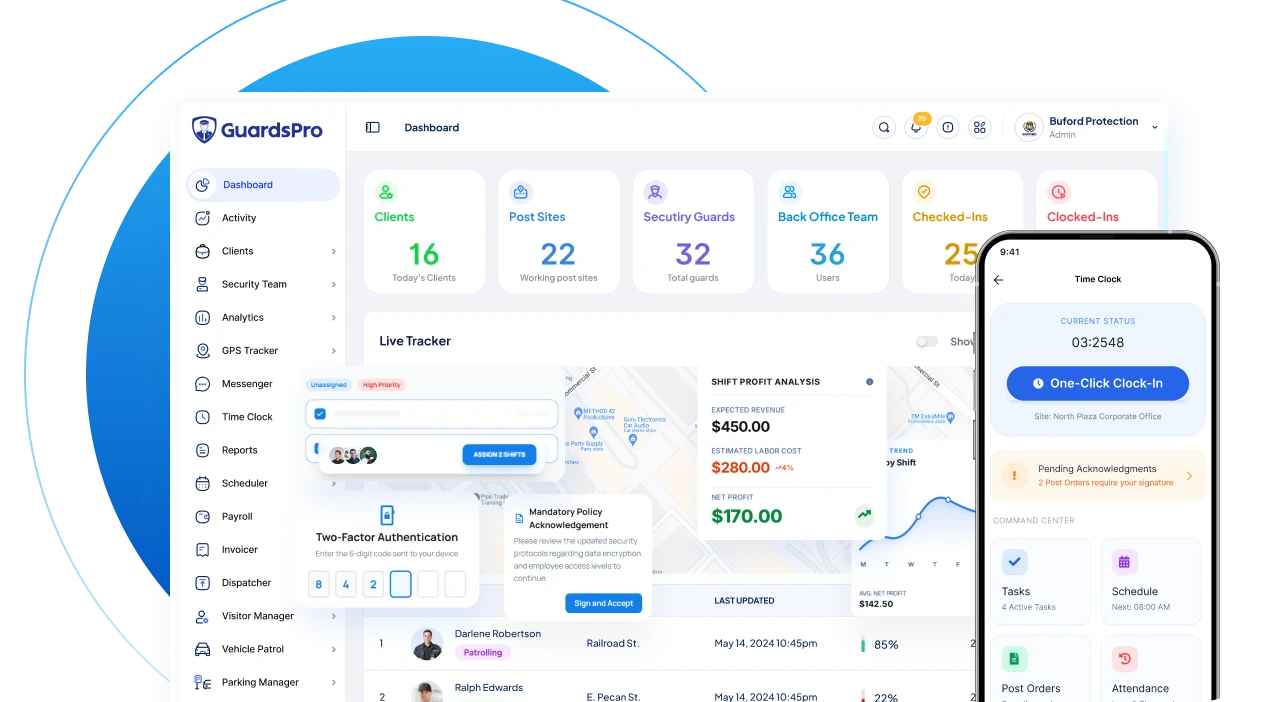
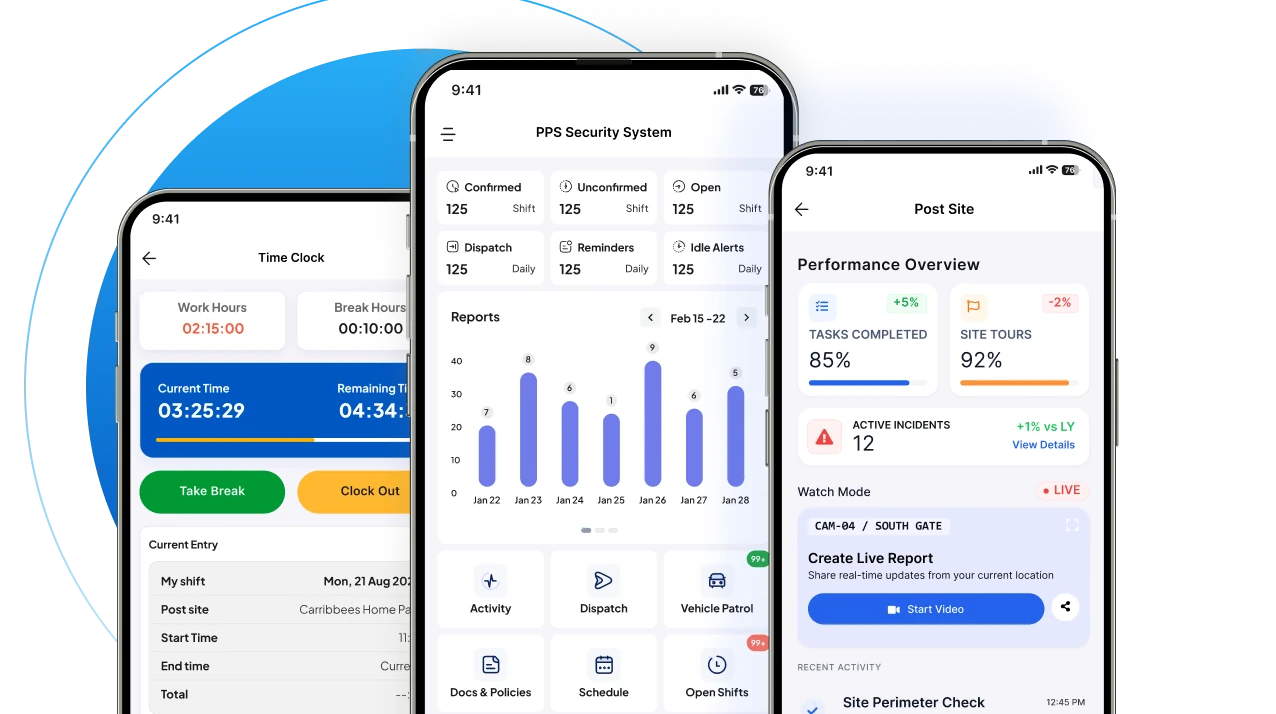
GuardsPro helps security companies keep these operational workflows connected through:
- Post orders: Share site-specific instructions so guards can reference the procedures relevant to their assigned location.
- Checklists: Assign tasks and inspection-related checklists to guards and monitor their completion.
- Incident reports: Document security incidents and provide supervisors with information for review.
- Daily activity reports: Keep relevant shift activities organized and accessible for operational follow-up.
- Passdown logs: Communicate important unresolved matters between guards and shifts.
These tools do not replace security training, professional judgment, or legal requirements. They help teams follow established procedures and maintain clearer records of their work.
For companies managing multiple client sites, that visibility can make it easier to maintain consistent service standards and respond to operational questions.
Frequently asked questions about security guard bag checks
Can a security guard search someone’s bag without permission?
Private security guards should not assume they have authority to search personal belongings without consent. The specific rules depend on applicable laws, the type of facility, and any relevant authorization or access agreement. Guards should follow their training and post orders and seek supervisory guidance when uncertain.
What should a security guard look for during a bag check?
Guards should look for items identified in the property’s prohibited-items policy, within the authorized scope of the inspection. The list may vary among event venues, warehouses, commercial buildings, and restricted facilities.
Should security guards put their hands inside a bag?
Guards should avoid unnecessary physical contact and should never reach blindly into a bag. Whether hands-on inspection is permitted depends on consent, applicable law, training, and the site’s authorized procedures.
What happens if someone refuses a security bag check?
Follow the site’s refusal procedure. If inspection is a lawful condition of entry, the person may be denied access. Do not force the inspection. Notify a supervisor when required.
Do security guards need to document every bag check?
Not necessarily. Routine screening records depend on site policy. Incidents, refusals, prohibited-item discoveries, and unusual situations may require documentation. Supervisors should establish clear reporting requirements.
How can supervisors make bag checks more consistent?
Provide current site-specific post orders, train guards on approved inspection methods, use task checklists, and review reported exceptions. Consistent instructions and documentation make it easier to identify and address procedural gaps.
Final thoughts
Performing a bag check professionally requires preparation, communication, awareness, and respect for the people being screened.
The most effective security guards know the rules of their assigned post, follow a consistent inspection process, recognize when a situation exceeds their authority, and report important incidents accurately.
For security companies, making those procedures accessible and easier to document is an important part of delivering reliable service across every shift.
Want clearer oversight of security procedures across your client sites?
Explore how GuardsPro brings post orders, guard checklists, and incident reporting together in one security operations platform.
Note: This article provides general operational guidance, not legal advice or a replacement for approved security training. Search authority and screening requirements vary by jurisdiction, workplace, and facility.