[ez-toc]
Winning a new security contract is only the beginning. Keeping that client for the long term depends on consistently delivering the service they expect and making that value visible.
For security companies, security client retention is closely tied to how confidently clients can see that their sites are being covered, guards are completing assigned activities, incidents are being handled, and service requirements are being met.
The challenge is that much of this work happens in the field. Clients may not see what is happening during every shift or patrol, so security companies need a reliable way to provide visibility into their service delivery.
This is where real-time operational visibility can make a difference.
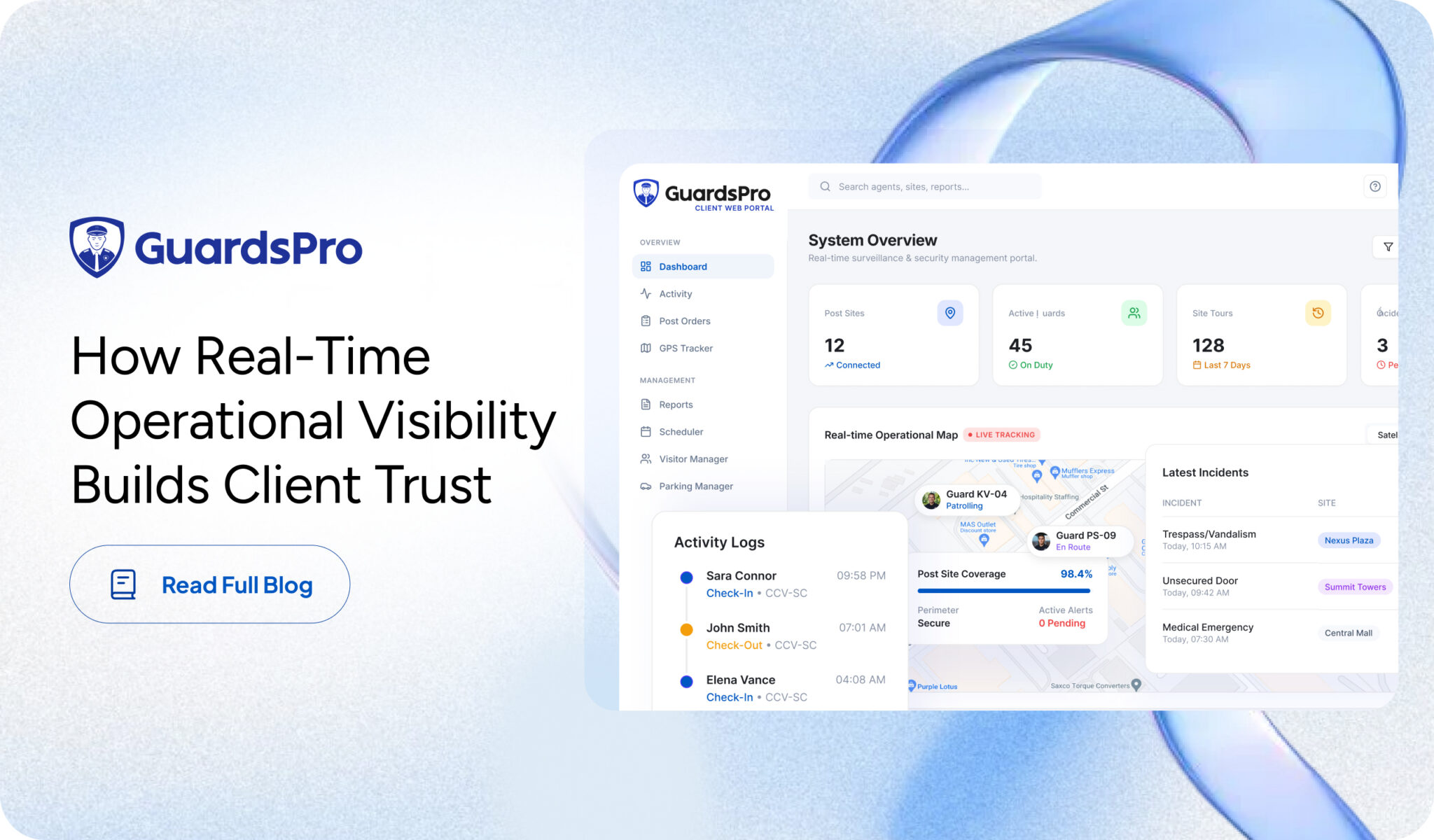
By connecting guard activity, GPS tracking, time logs, site tours, incidents, and reports, security companies can give both internal teams and clients a clearer view of what is happening across their sites.
Why Client Retention Matters for Security Companies
Security services are built around ongoing relationships. A client does not simply purchase a product and move on. They rely on a security company to consistently protect their people, property, and operations.
When clients are satisfied with the service, communication, and responsiveness they receive, they have stronger reasons to continue the relationship.
However, dissatisfaction can develop when clients experience:
- Poor communication
- Limited visibility into guard activity
- Delayed incident updates
- Inconsistent reporting
- Unclear service performance
- Missed or incomplete security activities
- Slow responses to concerns
Many of these problems come down to one underlying issue: the client cannot clearly see what they are paying for.
Real-time operational visibility helps close that gap.
5 Ways Real-Time Visibility Can Improve Client Retention
1. Give Clients Greater Visibility Into Service Delivery
Security clients want confidence that the services they are paying for are actually being delivered.
A security company may know that guards are arriving on time, completing patrols, submitting reports, and responding to incidents. But if that information stays inside the operations team, the client may not have the same level of confidence.
Providing access to relevant operational information can make service delivery more transparent.
For example, clients may want visibility into:
- Guard attendance
- Site activity
- Patrol completion
- Incident reports
- Time logs
- Site tour activity
- Security reports
With GuardsPro, security companies can provide clients with access to relevant operational information through connected client-facing tools and reporting capabilities.
This gives clients more than a verbal assurance that services are being delivered. It gives them information they can review.
2. Make Security Reporting More Transparent
Reports are an important part of the client relationship.
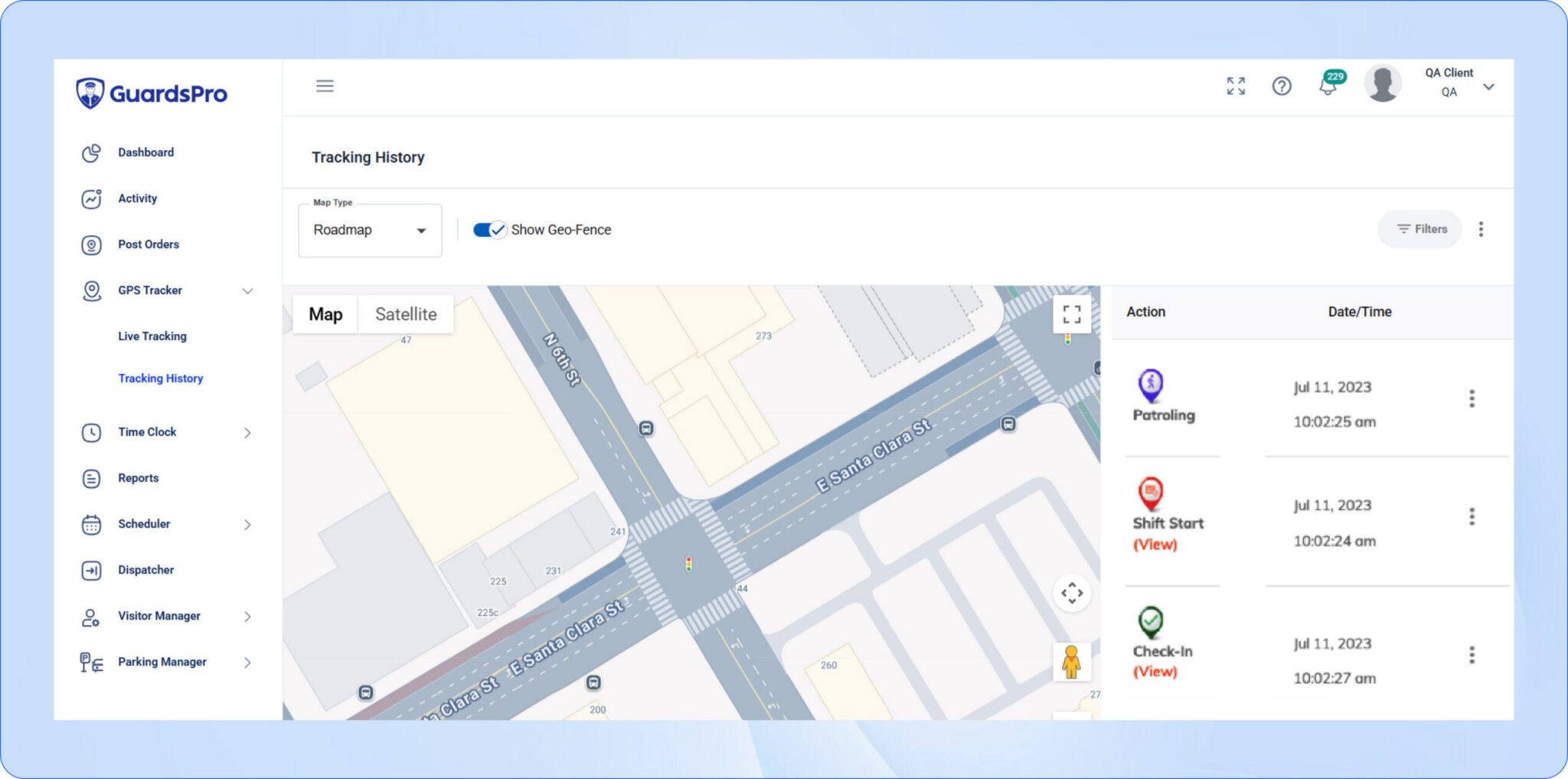 Clients often need documentation showing what happened at their sites, when it happened, and how guards responded.
Traditional reporting processes can make this difficult when information is collected manually or delivered only at the end of a reporting period.
Real-time security reporting can make information available sooner and create a more transparent communication process.
Instead of waiting for a manager to compile updates, security teams can provide timely information about incidents, activities, patrols, and other site events.
GuardsPro helps security companies centralize operational reports and field information, making it easier for teams to organize, review, and share the information clients need.
The result is a clearer connection between field activity and client reporting.
3. Communicate Issues Before Clients Have to Ask
One of the fastest ways to damage a client relationship is to let a client discover an operational problem before the security company communicates it.
Imagine a guard misses a scheduled shift or an incident occurs at a client site. If the client learns about the issue first, the security company may appear reactive.
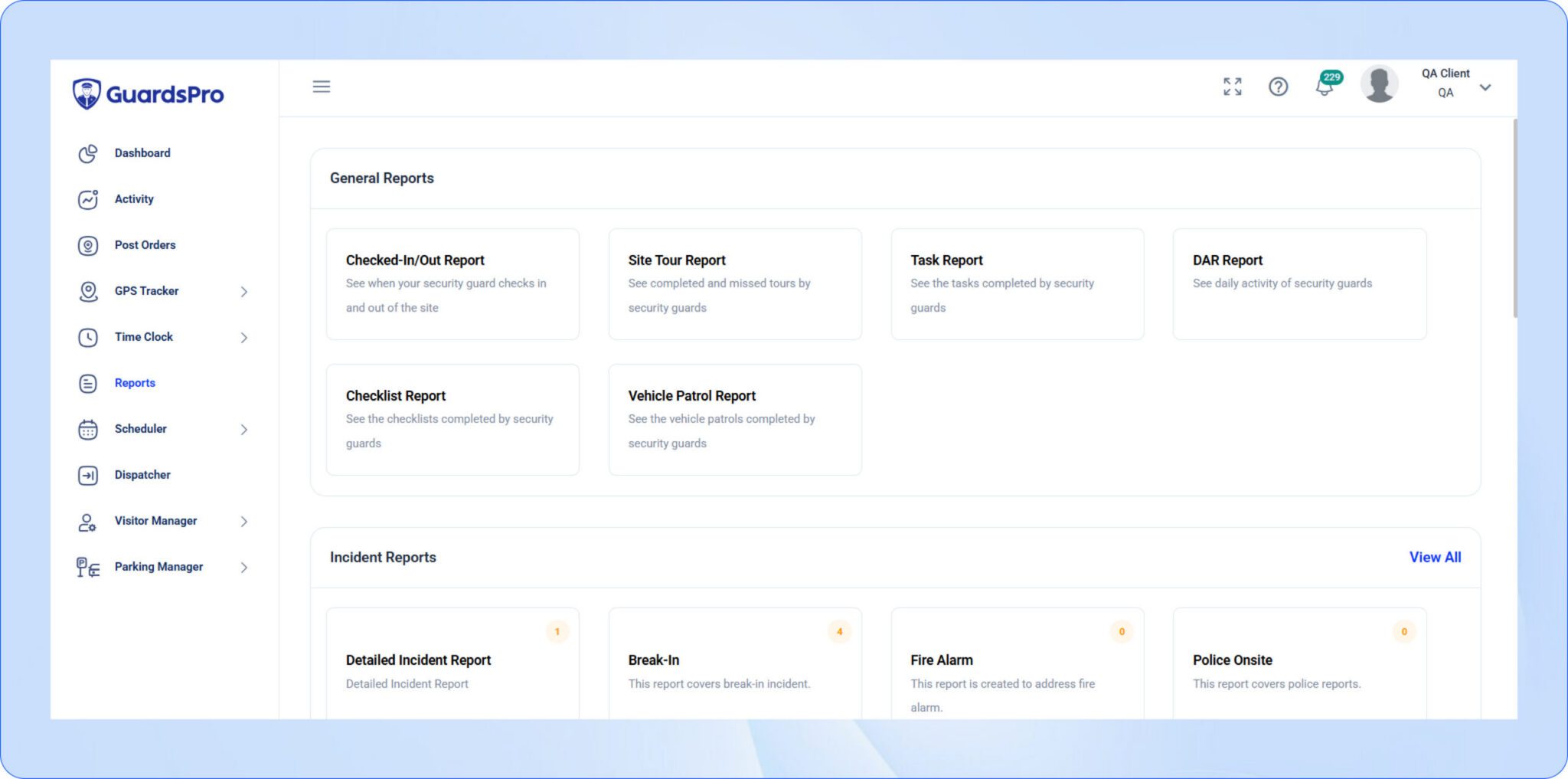
With better security operations visibility, internal teams can identify issues earlier and communicate with the client proactively.
For example:
Without visibility:
A client notices that a guard is missing and contacts the security company.
With real-time visibility:
The operations team identifies the missing clock-in, investigates the issue, arranges coverage, and communicates the resolution.
The problem may still occur, but the response is different.
Proactive communication shows clients that their security provider is monitoring service delivery and taking responsibility when something requires attention.
4. Use Operational Data to Demonstrate Performance
Client retention is not only about responding to problems. Security companies also need to demonstrate the value they provide when things are going well.
Operational data can help turn daily security activity into measurable performance.
For example, security companies can use data to show:
- Patrol completion rates
- Guard attendance
- Site tour activity
- Incident trends
- Report submission
- Response activity
- Workforce performance
This information can be especially useful during client review meetings.
Instead of saying, “Your site is being monitored,” a security provider can show relevant data demonstrating what has been completed and how the account is performing.
GuardsPro provides reporting and operational data that security companies can use to understand workforce and site performance and communicate that value to clients.
5. Build Trust Through Consistent Service Transparency
Client satisfaction is influenced by more than the quality of security personnel.
Clients also evaluate how easy their security provider is to work with.
When information is difficult to access, communication is inconsistent, or reports arrive late, clients may question whether the security company has sufficient control over its operations.
On the other hand, consistent visibility can reinforce trust.
A client can see that:
- Guards are assigned and tracked
- Shifts are being covered
- Patrols are being completed
- Incidents are documented
- Reports are available
- Issues are being addressed
This level of security service transparency can make the relationship more predictable and professional.
From Operational Visibility to Client Satisfaction
Better visibility does not automatically guarantee client retention. The real value comes from what security companies do with that visibility.
When operations teams have access to current information, they can respond to issues faster, communicate more effectively, and provide clients with more accurate updates.
That can improve the overall client experience.
For example, consider a client asking:
“Are our overnight patrols being completed?”
Without centralized data, a manager may need to contact a supervisor, check guard reports, and manually confirm the information.
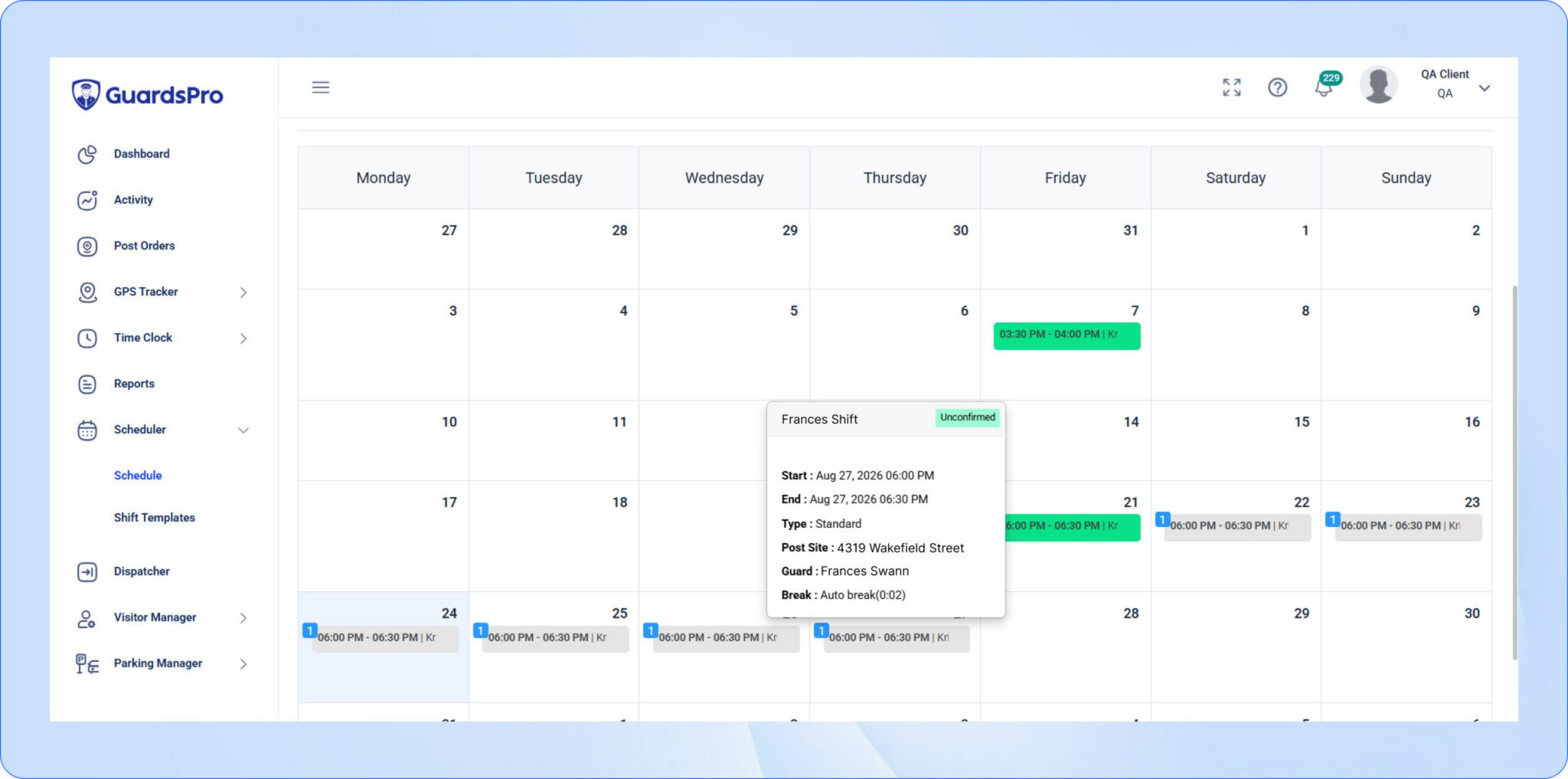
With a connected security management platform, the manager can access relevant site tour and patrol information much more quickly.
The answer becomes easier to provide, and the client gets greater confidence in the service.
How GuardsPro Supports Client Transparency
Real-time visibility works best when the information needed by operations teams and clients comes from connected workflows.
GuardsPro brings key security operations into one platform, including:
- Guard management
- Time and attendance
- GPS tracking
- Site tours
- Incident reporting
- Security reports
- Scheduling
- Client-facing access
This helps security companies maintain a clearer operational picture while giving them the tools to communicate service activity with clients.
For example, operations managers can monitor guard activity and site operations, while relevant information can be made available to clients through GuardsPro’s client-facing capabilities.
The result is a more connected approach to managing both security operations visibility and client communication.
Retention Starts With What Clients Can See
Strong client relationships are built through consistent service, communication, and trust.
For security companies, real-time operational visibility can strengthen all three.
When clients can see relevant information about guard attendance, patrols, incidents, reports, and site activity, they have greater confidence that their security provider is actively managing their account.
And when operations teams can identify issues early, communicate proactively, and demonstrate performance with real data, they are better positioned to deliver the level of service clients expect.
Security client retention is ultimately about more than keeping a contract. It is about continuously demonstrating the value of the service behind that contract.
With the right security guard management software, security companies can make that value easier to see, measure, and communicate.
Want to give GuardsPro a try?
Start your free 30-day trial of GuardsPro today and experience how smarter systems simplify multi-site security.
Sign up within 15 days to unlock an exclusive 15% discount on your subscription.
Explore how GuardsPro helps security companies simplify operations, improve accountability, and manage every site from one platform.
Have questions or feedback?
Get in touch anytime; we’re here to help, and your input helps us keep improving for teams like yours.