[ez-toc]
Security officers are the first line of defense for protecting people, property, and assets. Whether securing commercial buildings, residential communities, healthcare facilities, construction sites, or corporate offices, they play a vital role in maintaining safety and preventing security incidents.
However, the role of a security officer has evolved significantly over the years. Modern security professionals do far more than simply monitor entrances or patrol a property. They leverage technology, respond to emergencies, manage visitor access, document incidents, and help organizations maintain a safe and secure environment.
So, what does a security officer do on a daily basis? While responsibilities may vary by industry and site requirements, there are several core security officer duties that remain consistent across most assignments.
In this guide, we’ll explore the seven essential duties and responsibilities of a security officer and how these responsibilities contribute to effective security operations.
1. Conducting Regular Patrols and Site Inspections
One of the primary duties and responsibilities of a security officer is conducting regular patrols throughout the assigned property. Patrols help identify potential security threats, safety hazards, unauthorized activity, and operational issues before they escalate into larger problems.
A security officer may perform patrols:
- On foot
- In a patrol vehicle
- Through designated checkpoints
- Across indoor and outdoor areas
During patrols, officers monitor entrances, exits, restricted areas, equipment, and facility grounds while ensuring security policies are being followed.
Today’s security teams increasingly rely on GPS-enabled patrol tracking systems and digital checkpoints to improve accountability and verify patrol completion in real time.
2. Monitoring Access Control and Visitor Activity
Controlling who enters and exits a facility is another critical responsibility outlined in many security officer job descriptions.
Security officers are often tasked with:
- Verifying visitor identities
- Checking employee credentials
- Managing guest registrations
- Monitoring access points
- Enforcing site access policies
- Preventing unauthorized entry
Effective access control reduces security risks while helping organizations maintain a safe environment for employees, visitors, residents, and contractors.
Modern visitor management systems further streamline this process by replacing manual sign-in procedures with secure digital records.
3. Observing and Deterring Suspicious Activity
A key aspect of what a security officer does is maintaining a visible security presence that discourages criminal behavior.
Security officers remain alert to identify:
- Suspicious individuals
- Theft attempts
- Trespassing
- Vandalism
- Property damage
- Policy violations
In many cases, simply having a trained officer present is enough to deter unwanted activity.
By proactively identifying risks and taking appropriate action, security officers help prevent incidents before they occur.
4. Responding to Emergencies and Security Incidents
Security officers are frequently the first responders when emergencies arise.
Depending on the situation, they may be required to respond to:
- Medical emergencies
- Fire alarms
- Workplace accidents
- Security breaches
- Disturbances or altercations
- Natural disasters
Rapid response is essential for minimizing risks and protecting lives.
Security officers must remain calm under pressure, follow established emergency protocols, coordinate with management, and contact emergency services when necessary.
Proper training and preparedness are critical to handling these situations effectively.
5. Writing Detailed Incident Reports
Accurate documentation is one of the most important security officer roles and responsibilities.
Whenever an incident occurs, officers must create detailed reports that document:
- Date and time of the event
- Individuals involved
- Actions taken
- Witness information
- Evidence collected
- Follow-up recommendations
Incident reports serve as official records that support investigations, improve accountability, and help organizations strengthen future security procedures.
Today, many security companies use mobile reporting software that allows officers to complete reports instantly while attaching photos, videos, and supporting documentation directly from the field.
6. Monitoring Security Systems and Technology
Technology has become an essential component of modern security operations.
Security officers routinely interact with:
- CCTV surveillance systems
- Alarm monitoring systems
- Access control platforms
- GPS guard tracking solutions
- Incident reporting software
- Visitor management systems
These tools help officers maintain greater visibility across facilities, improve response times, and enhance overall operational efficiency.
Rather than replacing personnel, technology empowers security officers to perform their duties more effectively and with greater accountability.
7. Providing Professional Customer Service
While security is their primary responsibility, customer service is also an important part of a security officer’s role.
Security officers often interact directly with:
- Employees
- Visitors
- Residents
- Customers
- Contractors
- Vendors
Because they frequently serve as the first point of contact at a facility, officers represent both the client and the security company.
Strong customer service skills help officers:
- Communicate effectively
- Resolve conflicts professionally
- Assist visitors
- Provide directions and information
- Build trust with occupants
A professional and approachable demeanor contributes significantly to a positive security presence.
How Technology Is Changing Security Officer Responsibilities
The security industry continues to evolve as organizations adopt more advanced technologies.
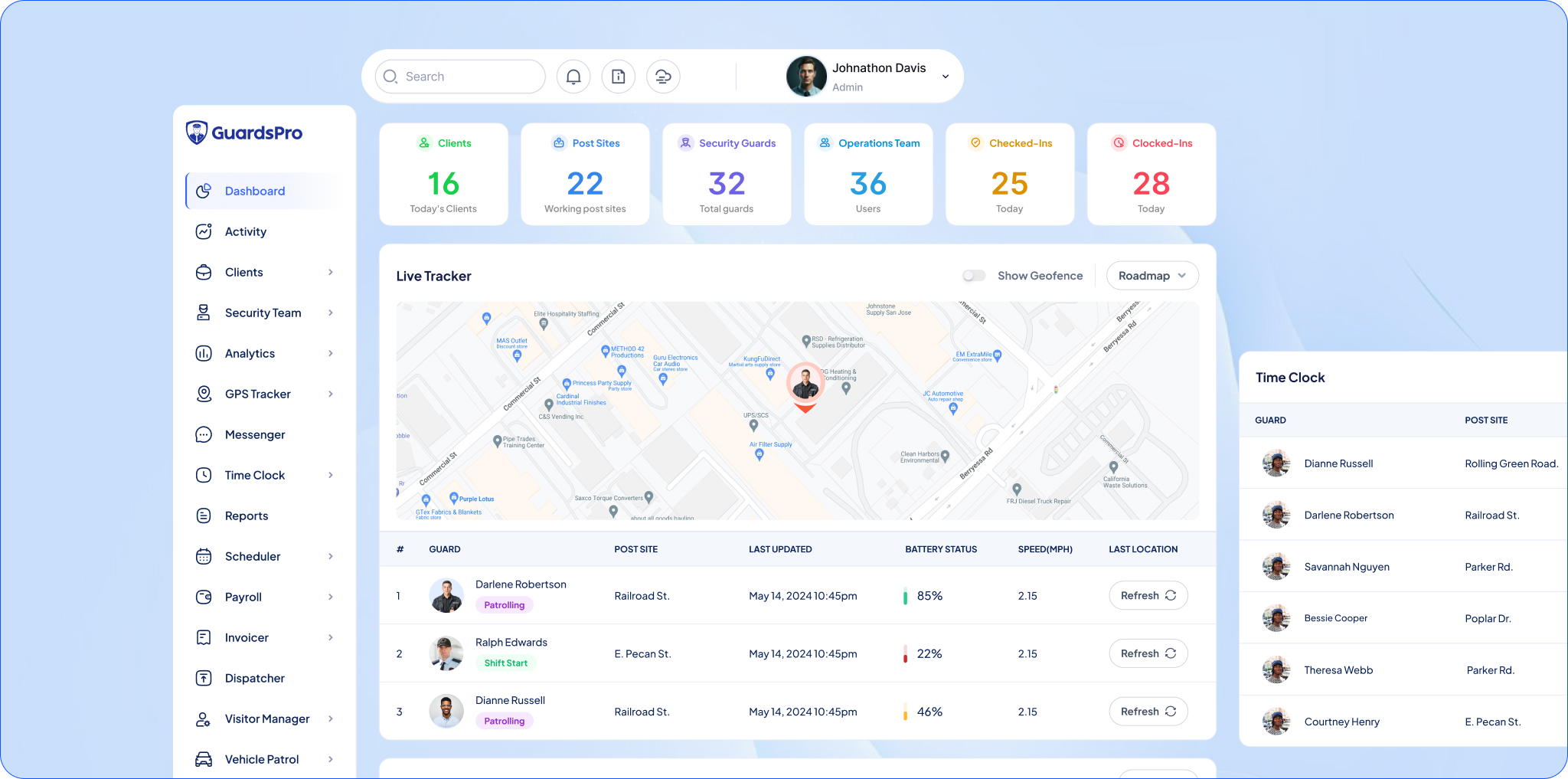
Modern guard management platforms like GuardsPro enable security officers to:
- Complete patrols digitally
- Receive dispatch notifications instantly
- Submit reports in real time
- Track patrol routes using GPS
- Verify attendance through mobile devices
- Monitor geofence activity
- Communicate with supervisors and team members
These advancements improve accountability, operational visibility, and response times while helping officers focus on proactive security measures rather than administrative tasks.
Security Officer vs Security Guard: What’s the Difference?
The terms security officer and security guard are often used interchangeably, but there can be differences depending on the organization and assignment.
Generally speaking:
Security Guards
- Focus primarily on monitoring and observation
- Conduct routine patrols
- Manage access control
- Maintain site presence
Security Officers
- Often have broader responsibilities
- Handle incident management
- Coordinate emergency response
- Utilize advanced security technologies
- Complete detailed reporting and documentation
While the distinction varies across organizations, security officers are often expected to take on additional responsibilities beyond traditional guarding duties.
Conclusion
The duties and responsibilities of a security officer extend far beyond simply watching over a property. Today’s security professionals are responsible for protecting people, managing access, conducting patrols, responding to emergencies, documenting incidents, leveraging technology, and delivering professional customer service.
As security challenges continue to evolve, organizations increasingly rely on trained security officers equipped with modern tools and technology to maintain safe and secure environments.
Understanding these responsibilities helps organizations build stronger security programs while ensuring officers have the resources they need to perform their jobs effectively.
Start your free 30-day trial of GuardsPro today and see how digital patrol management can transform your security operations.
Sign up within 15 days to unlock an exclusive 15% discount on your subscription.
Prefer a walkthrough?
Book a live demo and explore how GuardsPro helps manage patrols, reporting, scheduling, and workforce operations from one platform.

Prefer a walkthrough?
Book a live demo and explore how GuardsPro helps you manage scheduling, reporting, and operations across all your sites.
Have questions or feedback?
Get in touch anytime—we’re here to help, and your input helps us keep improving for teams like yours.