
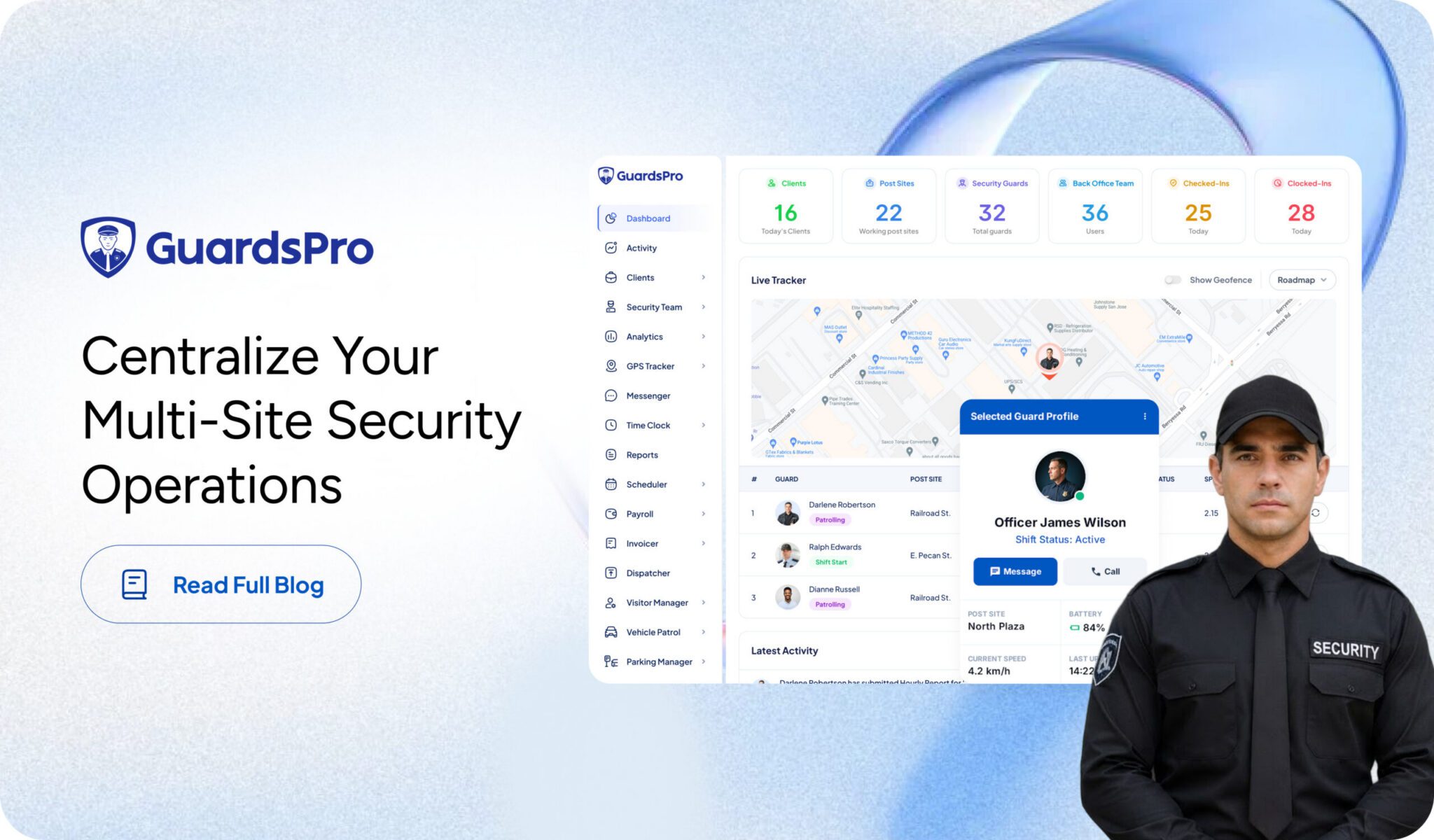
Managing security at one site requires attention. Managing it across five, ten, or fifty locations is a completely different challenge.
More sites mean more guards, more shifts, more patrols, more reports, and more client requirements to keep track of. A missed update at one location may be easy to catch. Across an entire operation, the same gap can go unnoticed until it becomes a bigger problem.
That is why multi-site security management is not simply about repeating the same process at more locations. It is about creating enough visibility and consistency to understand what is happening across the entire operation without losing sight of individual sites.
The key is centralization.
Instead of managing each location through separate spreadsheets, calls, messages, and reporting processes, security companies need a way to bring guards, schedules, site activity, reports, and operational updates into a more connected workflow.
With GuardsPro, security companies can manage guards and post sites through a centralized security management platform, helping supervisors stay connected to operations even when teams are spread across different locations. GuardsPro’s current platform includes live tracking, tracking history, geofencing, scheduling, reports, site tours, and other tools designed to work together.
Why Managing Multiple Security Sites Gets Complicated
Every security site has its own operational requirements.
One property may require several patrols every night. Another may have strict post orders. A third may need additional coverage during certain hours. Guards may work across different sites, supervisors may be responsible for several locations, and clients may expect regular updates about what is happening at each property.
As the number of sites increases, it becomes harder to answer simple questions quickly.
Who is working at Site A tonight?
Did the guard arrive at Site B?
Were the required patrols completed at Site C?
Was an incident reported at Site D?
Which location still needs coverage tomorrow?
When different locations are managed separately, finding those answers can mean checking multiple systems or contacting several people.
That fragmentation is one of the biggest challenges in multi-location security management. Industry guidance around multi-site operations consistently emphasizes centralization and standardized procedures as ways to reduce complexity while maintaining visibility across locations.
Start With One Clear View Across Your Sites
If you are asking how to manage multiple security sites, the first step is creating a reliable view of what is happening across them.
Supervisors should not have to treat every site as an isolated operation.
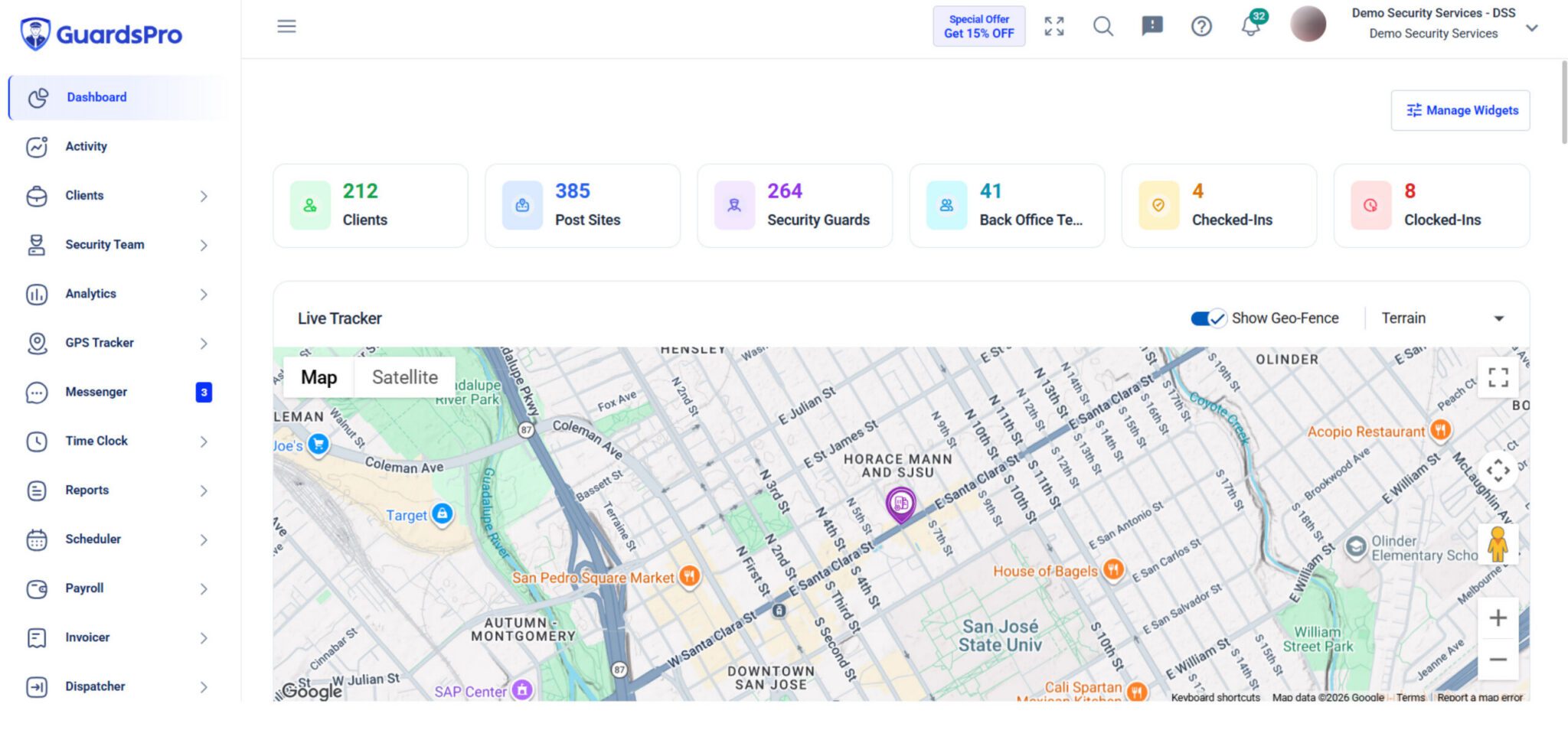
A centralized security dashboard makes it easier to bring information from different locations into one management environment. Instead of jumping between separate spreadsheets and communication channels, managers can work from a clearer operational picture.
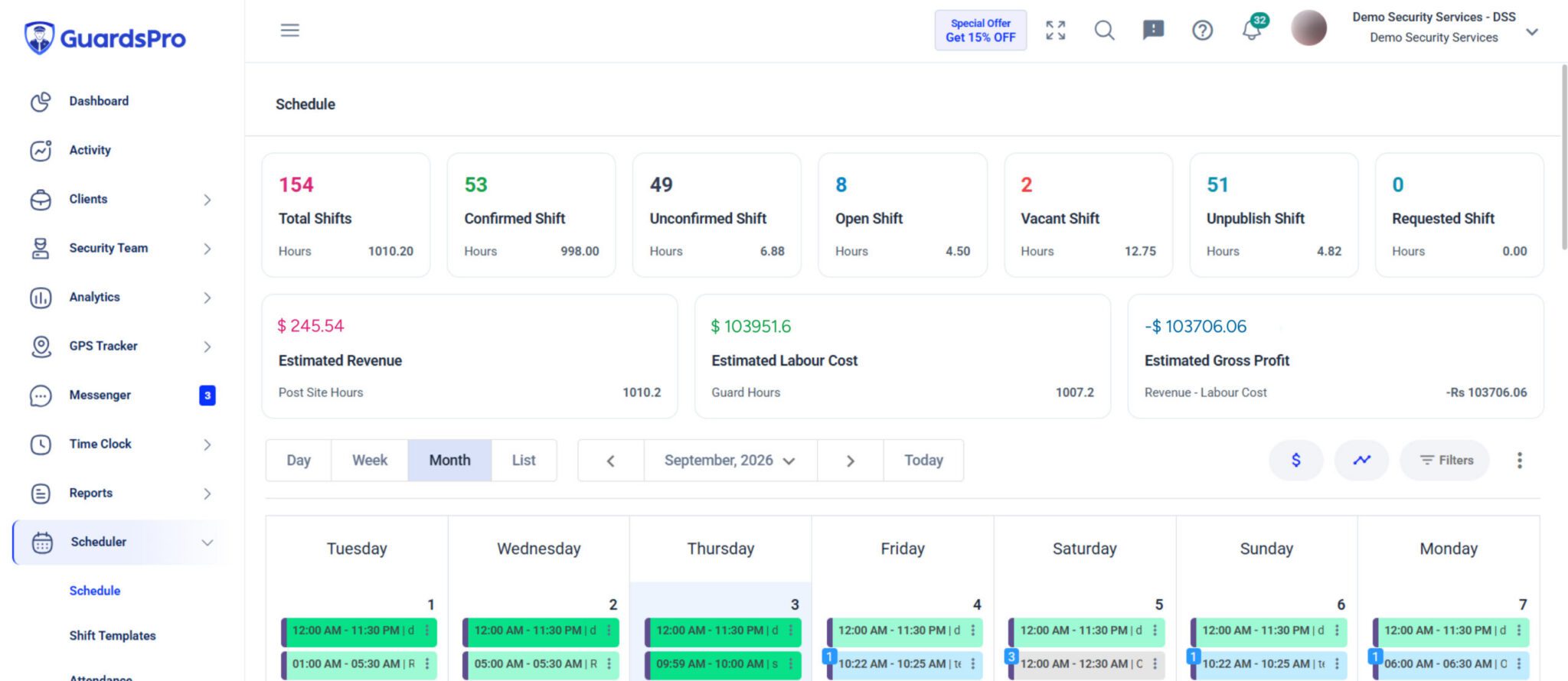
With the GuardsPro Back-Office Dashboard, security companies can access live activity, reports, GPS-based tracking, scheduling, and other operational information. Its Scheduler can also organize shifts by guard or post site and filter schedules by client, location, guard, shift type, status, and date range.
For multi-site operations, this matters because managers need both levels of visibility.
They need to understand what is happening across the business, while still being able to focus on what is happening at one specific location when something needs attention.
Centralization does not mean every location becomes identical. It means managers have a consistent way to oversee them.
Know What Is Happening in the Field
A schedule can tell you who is supposed to be at a site. Managers still need visibility into what actually happens once the shift begins.
That is where real-time guard monitoring becomes important.
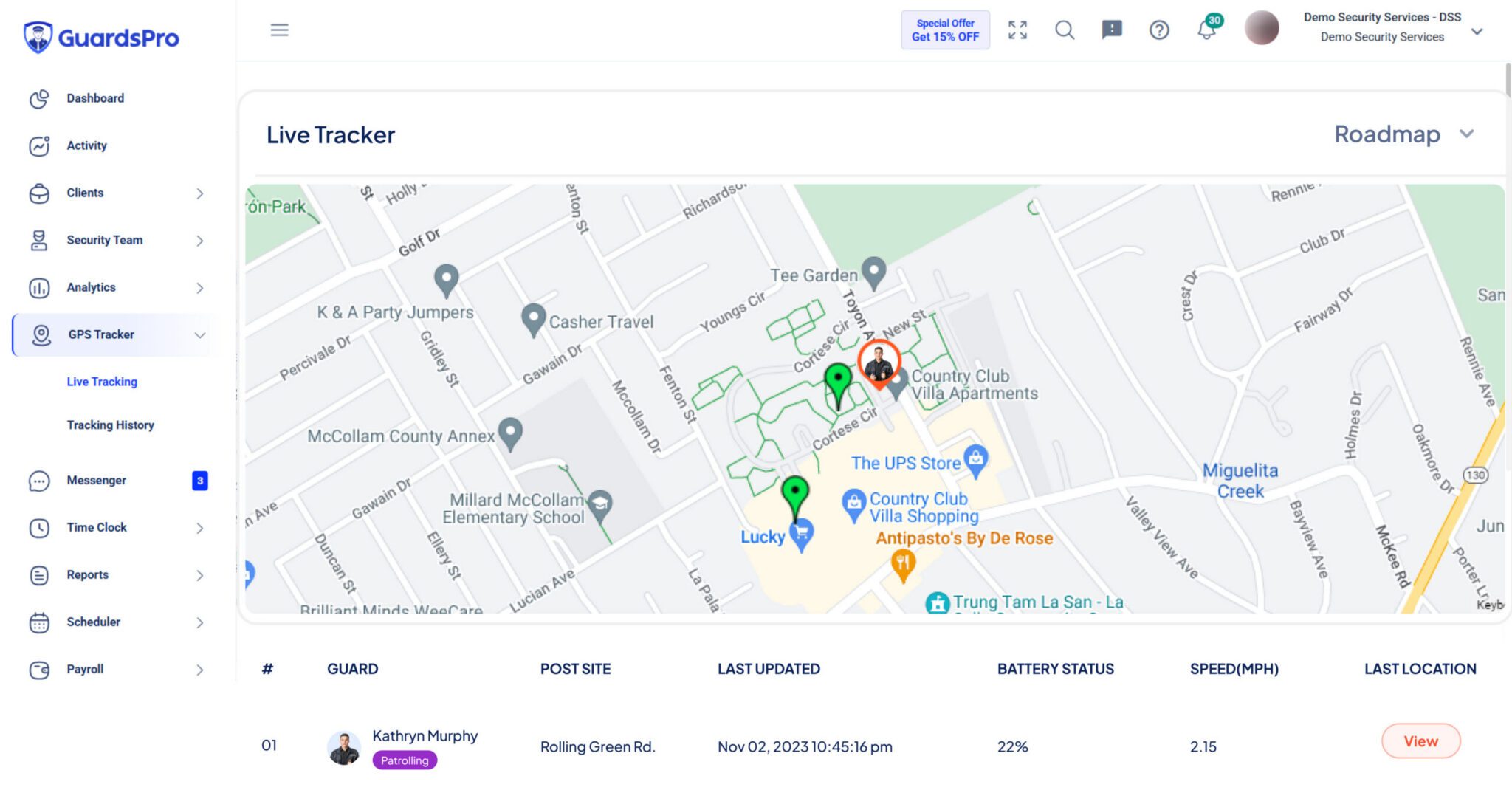
With GuardsPro, managers can use GPS-based live tracking to monitor on-site guard presence and movement. Tracking history allows supervisors to review previous on-field movement, while geofencing can create virtual boundaries around designated areas and support alerts when those boundaries are violated.
For a supervisor responsible for several sites, these tools add context that phone calls alone cannot provide.
If a question arises, the manager can look at available operational information instead of starting with, “Can someone call the guard and find out what happened?”
Geofencing can be particularly useful in multi-site security because each post site can have its own location requirements. Defined site boundaries add another layer of context around whether guards are working within the expected area. You can learn more about how geofencing works in security operations and how it can support guard tracking and accountability.
Tracking history is equally useful when the question is not about what is happening now, but what happened earlier.
Together, live tracking, tracking history, patrol activity, attendance, and field reports can give managers a much clearer understanding of security activity across different locations.
Keep Operations Consistent Without Treating Every Site the Same
Central visibility solves only part of the multi-site problem.
The next challenge is consistency.
If every location follows completely different processes for patrols, reporting, incident handling, or shift communication, managing the operation becomes unnecessarily complicated. Standardized security procedures are widely recognized as an important foundation for effective multi-site management because they create common expectations across locations while still allowing for site-specific requirements.
For a security company, that could mean maintaining a consistent approach to how guards complete reports, follow post orders, conduct site tours, and communicate important information.
But consistency should not mean ignoring what makes each site different.
A warehouse, residential community, retail property, and corporate office will not necessarily require the same patrol pattern or security instructions.
The better approach is to standardize the way operations are managed while allowing the actual requirements to remain site-specific.
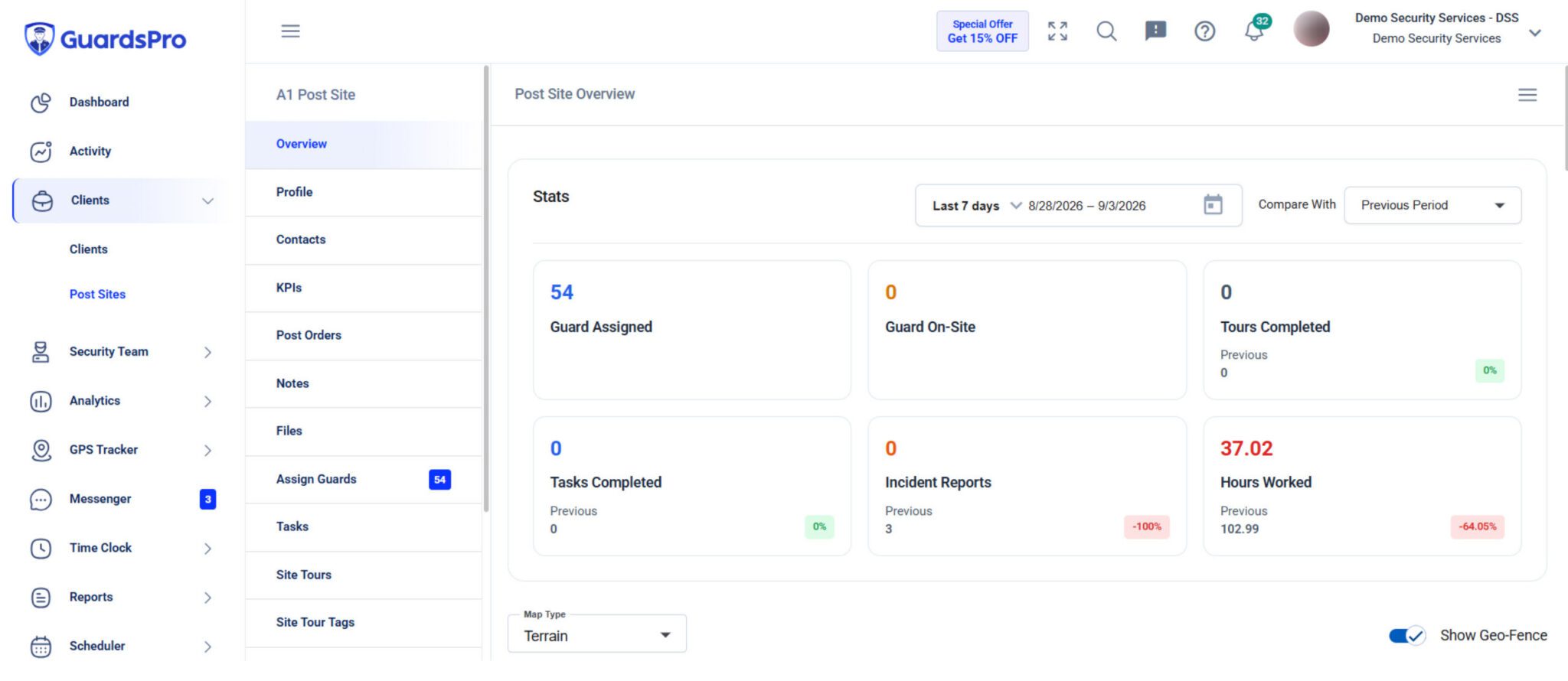
GuardsPro supports post-site-specific operational workflows, including custom reports, site tours, and tasks assigned to guards working at particular locations. This helps managers keep core processes organized while still managing what each individual client site requires.
That balance becomes increasingly important as a security company adds more clients and locations.
Keep Guard Scheduling Aligned Across Locations
Multi-site operations can quickly become a scheduling problem.
A supervisor is not simply filling shifts anymore. They are deciding which guards are working at which locations, whether every site has enough coverage, whether open shifts remain, and how a schedule change at one location affects the rest of the workforce.
That is why security workforce scheduling needs to work across sites rather than being managed independently for each location.
GuardsPro’s Scheduler is designed to create, assign, and manage guard shifts across multiple post sites. Managers can review shifts by guard or location, see scheduled hours, manage availability, monitor shift status, and plan schedules ahead.
This becomes especially useful when something changes.
If a guard becomes unavailable, the issue is not only the empty shift. The supervisor also needs to understand available guards, existing assignments, and whether moving someone will affect coverage somewhere else.
A connected scheduling process gives managers a clearer picture before they make that decision.
It also helps prevent each site from becoming its own scheduling spreadsheet, with different versions, manual updates, and no easy way to see workforce coverage across the wider operation.
What Multi-Site Security Management Software Should Bring Together
The value of multi-site security management software is not simply having more features.
It is having the information needed to manage different locations working together.
For security companies, that means being able to connect:
-
Guard schedules and site coverage
-
Real-time guard monitoring and tracking history
-
GPS tracking and geofencing
-
Patrol and site tour activity
-
Time and attendance
-
Incident and field reports
-
Post-site tasks and instructions
-
Client visibility and operational reporting
When these activities are disconnected, managers spend more time collecting information.
When they are connected, managers can spend more time using that information to make decisions.
GuardsPro brings these functions into a broader security guard management platform. The platform also provides clients with access to information such as reports, schedules, post orders, live tracking, and tracking history through its Client Web Portal, helping extend visibility beyond the back office when appropriate.
For a growing security company, that connected approach makes it easier to add new guards and post sites without creating an entirely new management process every time the operation expands.
Stay in Control Without Being at Every Site
The real challenge of multi-site security management is distance.
Managers cannot physically stand beside every guard or visit every location every time something changes.
They should not have to.
The goal is to build an operation where the right information reaches managers without requiring them to constantly chase it.
A centralized system gives supervisors greater visibility across locations. Real-time guard monitoring helps show what is happening now. Tracking history helps explain what happened earlier. Scheduling keeps guards and coverage organized. Standardized workflows make expectations clearer across different locations.
Together, those capabilities help turn a group of separate security sites into one more connected operation.
That is where GuardsPro can help.
Rather than managing every post site through a different combination of spreadsheets, calls, messages, and manual reports, GuardsPro gives security companies a platform for managing guards, schedules, tracking, patrols, reports, and site activity across their operation.
Because staying in control of multiple sites should not mean being everywhere at once.
It should mean knowing what is happening wherever your guards are working.
Manage Every Site With Greater Visibility Using GuardsPro
Whether you manage two client sites or a growing network of locations, GuardsPro helps bring your security operations together.
Manage guards and schedules, monitor field activity, review tracking history, use geofencing, access reports, and maintain better visibility across your post sites from one connected platform.
Start your free 30-day trial of GuardsPro today and experience a more connected approach to multi-site security management.
Sign up within 15 days to unlock an exclusive 15% discount on your subscription.
Have questions or feedback? Get in touch anytime.
FAQs
What is multi-site security management?
Multi-site security management is the process of coordinating guards, schedules, patrols, reporting, site procedures, and other security activities across multiple locations. A centralized approach helps managers maintain visibility and consistency without having to manage every location as a completely separate operation.
How do you manage security across multiple sites?
Managing security across multiple sites starts with centralizing visibility. Security companies need a clear way to view guard schedules, site coverage, field activity, patrols, reports, and operational updates across locations. Standardized processes, real-time guard monitoring, and centralized workforce scheduling can also make it easier to keep different locations aligned.
What are the biggest challenges of managing multiple security sites?
Common challenges include limited visibility across locations, inconsistent processes, scheduling guards across different sites, responding to last-minute coverage changes, keeping reports organized, and making sure each location follows the required security procedures.
Why is a centralized security dashboard important for multi-site security?
A centralized security dashboard gives managers one place to access operational information from different locations. This reduces the need to piece together updates from separate spreadsheets, calls, emails, and reporting systems and makes it easier to focus on locations that require attention.
How does real-time guard monitoring help with multiple sites?
Real-time guard monitoring gives supervisors greater visibility into guards working away from the office. When combined with GPS tracking, geofencing, patrol activity, attendance, and reports, it provides more context about what is happening across different client locations.
How does GuardsPro help with multi-site security management?
GuardsPro brings scheduling, live tracking, tracking history, geofencing, site tours, reporting, attendance, and other guard management workflows into a connected platform. This helps security companies manage guards and post sites with greater visibility as their operations grow.